Weed the People Need Clarity

Señorita at Lollapalooza is further proof that consumers like drinking their weed—even if lawmakers cannot decide whether to keep it legal
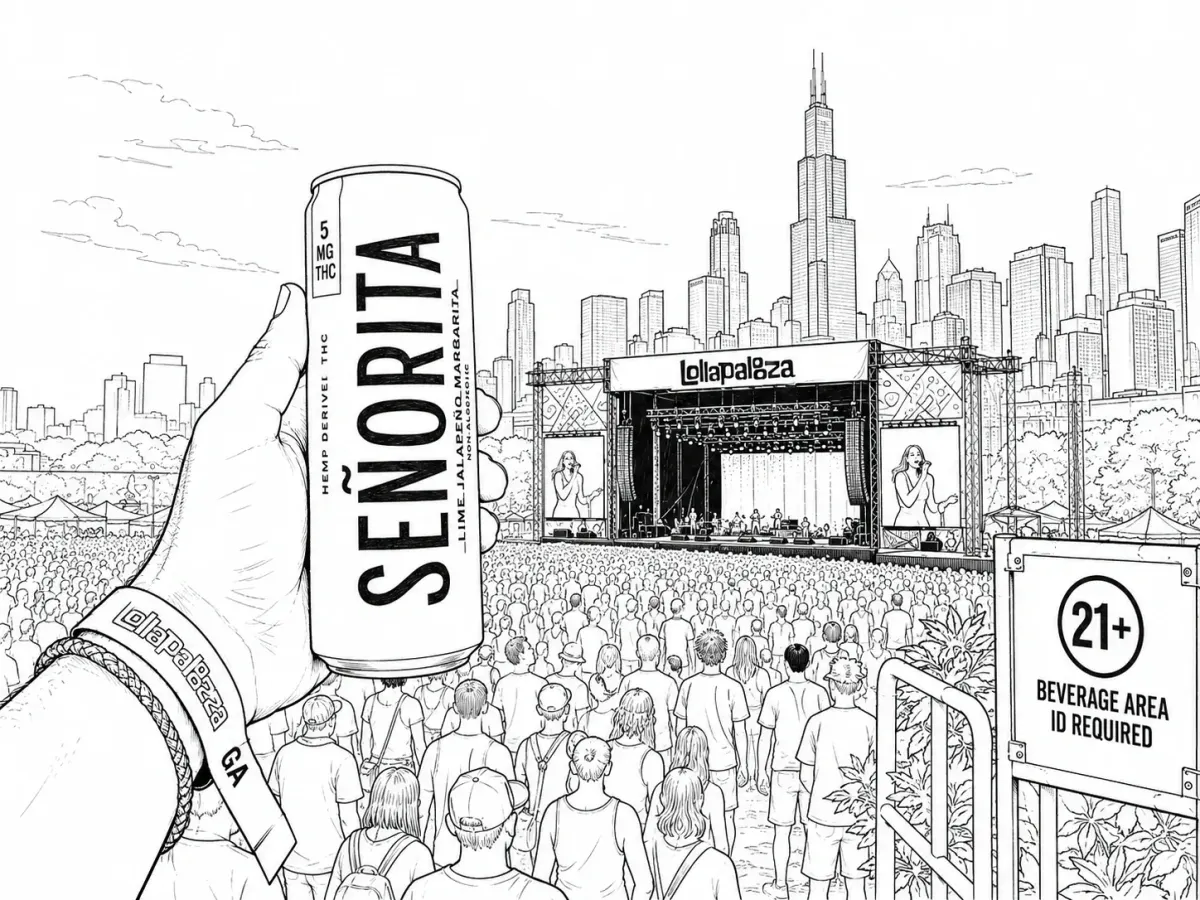
Señorita, the hemp-derived THC beverage brand owned by the Kovler family’s RYTHM, has landed a very Chicago contract: Official THC Beverage Partner of Lollapalooza.
For the first time, festivalgoers 21 and older will be able to buy Señorita’s five-milligram Mango Margarita and Lime Jalapeño Margarita at select bars throughout Grant Park during Lollapalooza, July 30 through August 2.
That is not merely another sponsorship announcement. It is evidence.
Consumers like drinking their weed.
They like it at music festivals, sporting events, restaurants, neighborhood stores and entertainment venues. They increasingly see THC beverages not as some strange product sold around the edges of cannabis culture, but as an adult beverage option that can sit naturally beside beer, wine, cocktails and nonalcoholic drinks.
Señorita’s formulation and pedigree matter here. The drinks were developed by award-winning winemakers Joel Gott and Charles Bieler using organic blue agave, real fruit juice and Himalayan pink salt. Gott’s wines have long occupied that approachable, approximately-$12 sweet spot: good enough for discerning drinkers, familiar enough for the supermarket aisle.
That is precisely where cannabis beverages are headed.
While Target reportedly retrenches from the category, Albertsons is testing hemp-derived THC beverages in Chicago-area stores. In Chicago, of course, Albertsons means Jewel-Osco—or, as generations of Chicagoans insist on calling it, “the Jewels.” Albertsons operates Jewel-Osco as one of its major regional supermarket banners.
This is the mainstream of the mainstream.
Add Lollapalooza to Navy Pier, the United Center, restaurants, liquor stores, bodegas and the proliferation of THC and cannabis-leaf logos across the city, and the conclusion becomes difficult to avoid:
Chicago is becoming the epicenter of the conflict between hemp-derived THC and state-licensed cannabis.
The city is also becoming a laboratory for what comes next.
Where Grown In Stands
For discerning Grown In readers—and for the industry leaders, lawmakers, operators, service providers, cultural influencers and aspiring entrepreneurs we convene—our position is straightforward.
1. Consumers know more than we sometimes give them credit for.
And consumers like drinking their weed.
The market is communicating with unusual clarity. People want alternatives to alcohol. They want predictable doses, familiar flavors and products that fit naturally into concerts, restaurants, sporting events and social occasions.
The cannabis industry should listen.
2. The 2018 Farm Bill loophole was unfair to licensed cannabis pioneers.
State-licensed cannabis operators spent years raising capital, securing scarce licenses, constructing compliant facilities, paying punitive taxes and operating under intense regulatory scrutiny.
Then the federal definition of hemp—based principally on a limit of 0.3 percent delta-9 THC by dry weight—helped create an enormous parallel market for intoxicating products outside those state systems.
That was inequitable.
It was also capitalism.
Some of the smartest operators now navigate elegantly between licensed cannabis and hemp-derived THC. They understand that consumers do not organize their lives according to regulatory silos. Consumers generally care whether a product is safe, enjoyable, affordable, accessible and reliably dosed.
The industry may resent the loophole. It cannot pretend the resulting consumer behavior does not exist.
3. Grown In translates consumer cannabis trends into actionable industry intelligence.
Our aim is not to referee an ideological cage match between hemp and marijuana.
Our aim is to foster a cracklingly healthy, competitive and inspiring cannabis scene for everyone: licensed operators, responsible hemp businesses, patients, adult consumers, researchers, workers, investors and communities.
That requires supporting rigorous testing, transparent labeling, age restrictions, responsible marketing and meaningful enforcement.
It also requires distinguishing between two very different things.
There are nefarious intoxicating-hemp purveyors selling inaccurately labeled, contaminated or potentially dangerous products. Federal regulators have repeatedly warned that certain intoxicating cannabinoid products have not been evaluated or approved for safe use and may present public-health risks.
And there are well-capitalized, professionally managed and compliance-forward companies producing credible adult beverages.
Licensed-cannabis advocates lose credibility when they deliberately collapse those businesses into one undifferentiated category.
November 12 Is Coming
The argument is no longer theoretical.
A federal law signed November 12, 2025, dramatically narrows the definition of legal hemp and is scheduled to take effect on November 12, 2026. Among other restrictions, the new framework establishes an extremely low total-THC threshold that would effectively remove most currently marketed hemp-derived THC beverages and edibles from the federally lawful hemp category.
That gives the industry less than four months.
Yet the multimillion-dollar question for Chicago businesses remains unanswered:
What actually happens on November 12?
Who enforces the new standard?
Against whom?
On what timeline?
Using what testing protocol?
Will products disappear from shelves immediately? Will federal authorities prioritize manufacturers, distributors or retailers? Will Illinois enact a replacement framework? Will Congress modify the prohibition before it takes effect? Will responsible beverage companies receive an orderly pathway into regulated cannabis, alcohol-style distribution or another federally supervised category?
Wait—what?
Businesses are signing leases, hiring employees, entering distribution agreements and planning inventory without knowing whether their principal product category will remain lawful through the holiday season.
Weed the People need clarity.
The Pritzker Vacuum
This question becomes especially interesting as state lawmakers from across the country convene at McCormick Place and encounter Chicago’s increasingly consumption-forward cannabis economy.
Illinois’ licensed cannabis operators have invested heavily in the state’s political, civic and philanthropic infrastructure. They helped build the regulated system, employ thousands of people and generate substantial tax revenue. At the same time, hemp-derived beverages are gaining access to mainstream venues and retail channels that licensed cannabis products cannot presently reach.
Governor JB Pritzker has considerable reason to understand the issue.
His administration oversees one of the country’s largest adult-use cannabis markets. His political coalition includes lawmakers, organized labor, social-equity advocates, major cannabis companies, small businesses and public-health constituencies with sharply conflicting views of intoxicating hemp.
When Grown In asked the governor about the beverage loophole, he said he had not read enough about it to offer a position.
We do not find that answer credible.
Pritzker is frequently celebrated as Illinois’ “quantum governor,” a national political aspirant and an accidental boss of the modern Illinois Democratic Party. His family and the Kovler family occupy overlapping chapters of Chicago’s civic, business and philanthropic history. Whether or not those circles have discussed Señorita specifically, the conflict between regulated cannabis and intoxicating hemp is now too economically significant for the governor to treat as an obscure policy footnote.
Chicago Mayor Brandon Johnson, meanwhile, has expressed sympathy for hemp businesses and the argument that an outright crackdown could wipe out legitimate small-business owners.
That concern is not imaginary.
Look around Chicago.
A meaningful ecosystem of retailers, distributors, hospitality operators, event producers and consumer brands has formed around hemp-derived THC. Some participants deserve scrutiny. Others deserve a regulatory pathway that acknowledges their investments and protects adult consumers.
Weak-kneed avoidance from City Hall and Springfield will not resolve the conflict.
Leadership might.
A Chicago Cannabis Compact
Prospective candidates for mayor—including the incumbent—should be willing to discuss this publicly.
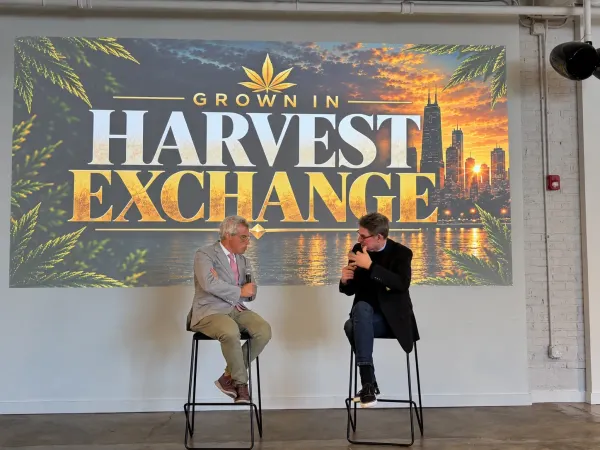
Grown In and Project Middle Ground invite them to join industry operators, hemp-beverage producers, licensed dispensaries, public-health experts, researchers and consumers for a panel conversation on October 8 in Avondale.
The objective should not be another shouting match between “legal weed” and “loophole weed.”
The objective should be a Chicago Cannabis Compact built around a few foundational principles:
Adult consumers deserve legal access to tested and accurately labeled THC beverages.
Children must be protected through strict age verification, packaging and marketing rules.
Licensed cannabis pioneers deserve relief from structural disadvantages created by federal prohibition and unequal regulation.
Responsible hemp businesses deserve a transparent opportunity to enter an enforceable regulatory system.
Dangerous products and dishonest operators should be removed from the market.
Researchers, regulators and legitimate businesses need common standards for testing, dosage and product safety.
And everyone needs to know what the rules will be on November 12.
Chicago to the Globe
Cannabis is a major Illinois employer and a potentially important partner for universities, medical researchers and future FDA-regulated product development.
The University of Illinois’ Discovery Partners Institute and the state’s emerging cannabis-research infrastructure could help establish credible standards for testing, product design, public health and consumer education.
Longer term, cannabis belongs inside Chicago’s global-economic-development conversation.
World Business Chicago, the Illinois Economic Development Corporation and other public-private institutions devote considerable attention to quantum computing, responsible artificial intelligence and other politically fashionable sectors.
They pay considerably less attention to a cannabis industry that already employs—and indirectly supports—many thousands of their constituents.
That should change.
Chicago and Illinois can help model the commercial, cultural and medicinal norms and institutions that global cannabis markets will eventually require.
We should do that.
That is why we are doing this.
Project Middle Ground exists to bring people with competing interests into the same room. Grown In brings together pot perspectives from across the spectrum: industry operators, aspirants, lawmakers, researchers, cultural influencers, service providers, patients, consumers and everyone else navigating this plant here, there and everywhere—yesterday, today and tomorrow.
Señorita landing at Lollapalooza is not the end of the hemp-versus-cannabis debate.
It is the clearest possible signal that the debate has escaped the dispensary, entered the mainstream and arrived in Grant Park.
Consumers have spoken.
Now the government needs to tell them whether their drink will still be legal after November 12.