
Cannabis & Hemp Industry Library
A structured resource hub covering cannabis policy, markets, products, and research across Illinois, the Midwest, and beyond.
This library is built for operators, investors, policymakers, researchers, and industry observers who want a clearer understanding of how cannabis and hemp markets actually work from federal law and state regulation to retail distribution and market structure.
Last updated: April 2026
Start Here
New to the industry? Begin with these foundational pages:
- Industry Guide — an overview of how the cannabis and hemp industry currently works
- FAQ — quick answers to common questions about policy, products, and markets
Industry Guide
A high-level overview of the cannabis and hemp industry, including regulation, product categories, market structure, and business economics.
Policy
Cannabis and hemp operate within a layered mix of federal, state, and local regulation. The legal distinction between hemp and cannabis shapes how products are produced, distributed, sold, taxed, and enforced.
That framework continues to evolve as lawmakers, regulators, and courts confront hemp-derived THC products, federal rescheduling debates, enforcement uncertainty, and the widening gap between federal law and state-legal markets.
Illinois Trackers
A concise snapshot of Illinois cannabis and hemp policy from 2013 through 2026.
Each entry pairs the bill with a practical explanation of the proposal, likely business or policy impact, and sponsor-office outreach details.
A practical snapshot for operators, investors, policy readers, and advisors tracking how Illinois may regulate hemp beverages and adjacent hemp-derived cannabinoid products.
Key policy topics:
- Illinois Hemp Regulation
- The Federal Status of Marijuana and the Policy Gap with States
- FDA Regulation of Cannabis and Cannabis-Derived Products, Including Cannabidiol (CBD)
- Controlled Substances Act — the federal legal framework that still classifies marijuana as illegal at the national level
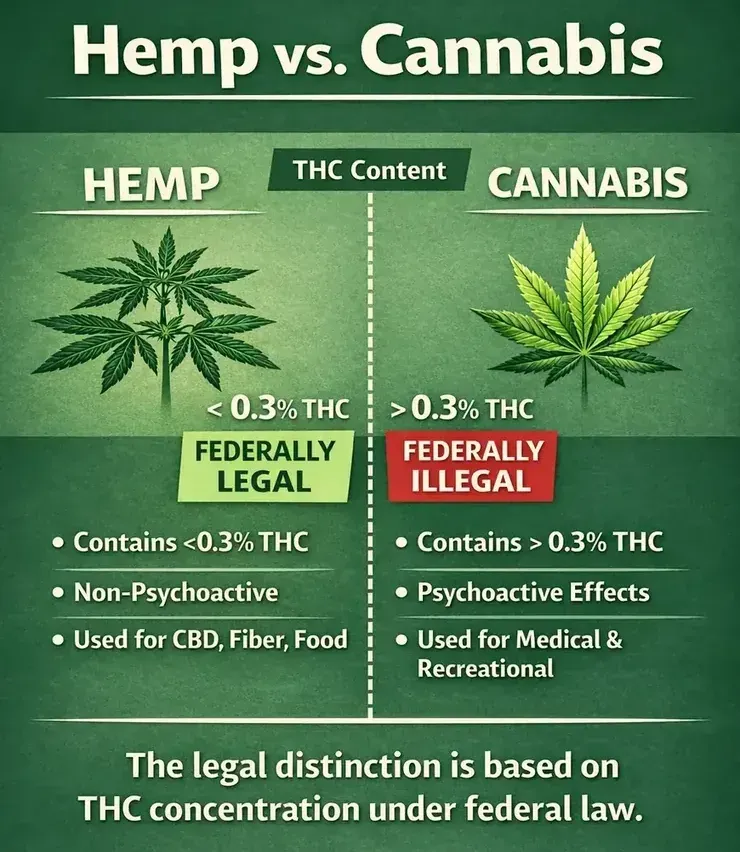
- 2018 Farm Bill — the law that federally legalized hemp and established the 0.3% delta-9 THC threshold
- Internal Revenue Code Section 280E — the federal tax rule that limits ordinary business deductions for many cannabis operators
- Federal Legal Consequences of Rescheduling Marijuana — how rescheduling could affect criminal exposure, tax treatment, medical research, business operations, and the tension between federal and state cannabis law
Section 280E does not let marijuana businesses deduct most ordinary business expenses for federal income tax purposes, even when those businesses are fully licensed under state law.
Markets
Cannabis markets vary widely across states. The Midwest offers a useful lens into how different regulatory models shape pricing, competition, licensing, consumer access, and long-term market structure.
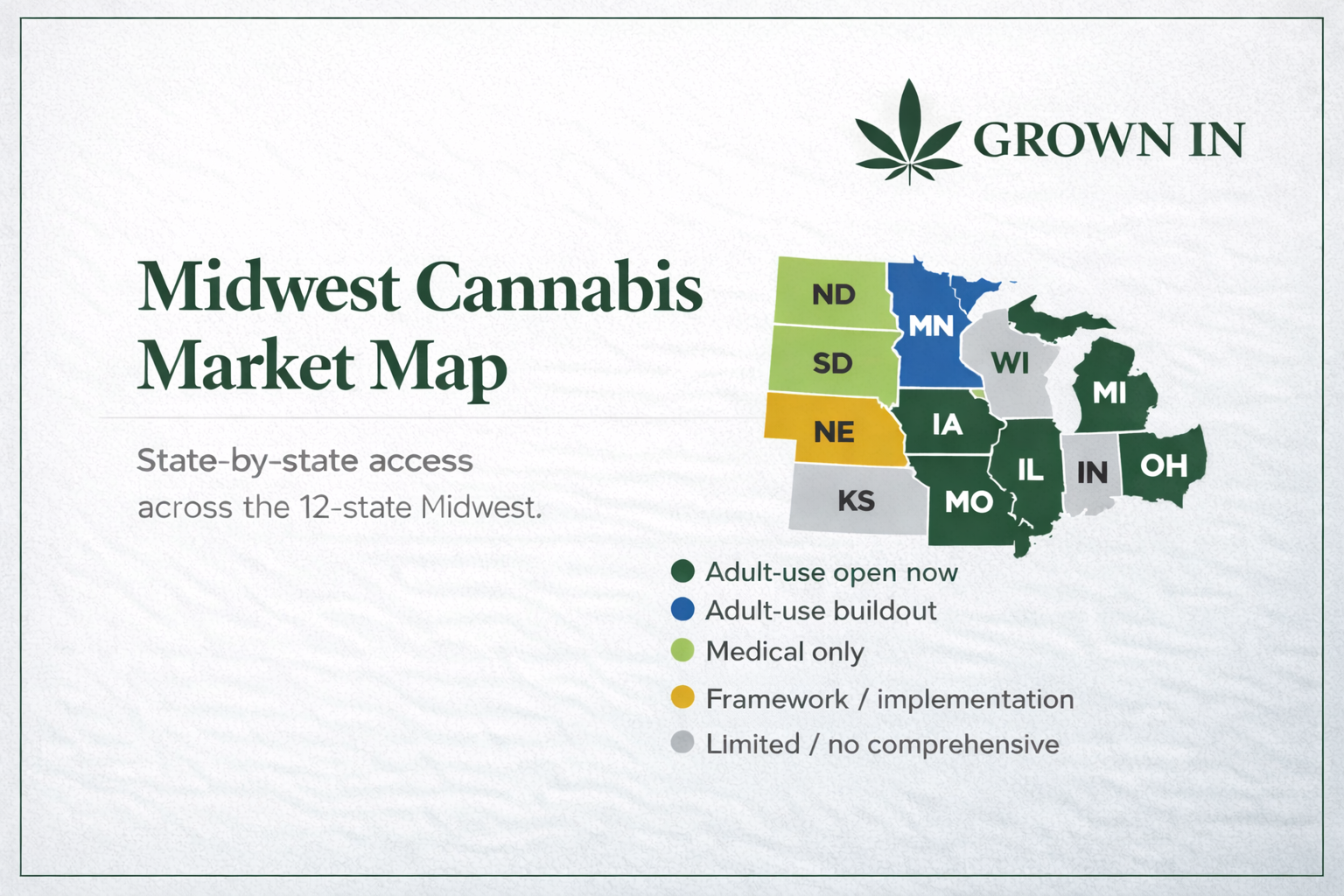
State-by-state public-access posture across the 12-state Midwest
Products
Product categories are shaped as much by regulation as by chemistry. The distinction between hemp-derived and cannabis-derived products affects where items can be sold, how they are taxed, who can buy them, and how they are regulated.
Visual Guide
The legal distinction between hemp and cannabis begins with THC concentration under federal law.
Research
Scientific research, institutional infrastructure, and data systems will play a major role in the long-term development of the cannabis industry. Despite rapid market growth, research remains limited by federal restrictions, funding gaps, inconsistent standards, and fragmented data.
How to Use This Library
Each page in this library is designed to stand on its own while also contributing to a broader understanding of the industry.
Together, these guides offer a structured view of policy, markets, products, and research — helping readers move from basic definitions to more advanced industry insight.