Malört Has Rules. Weed Drinks Need Them Too.

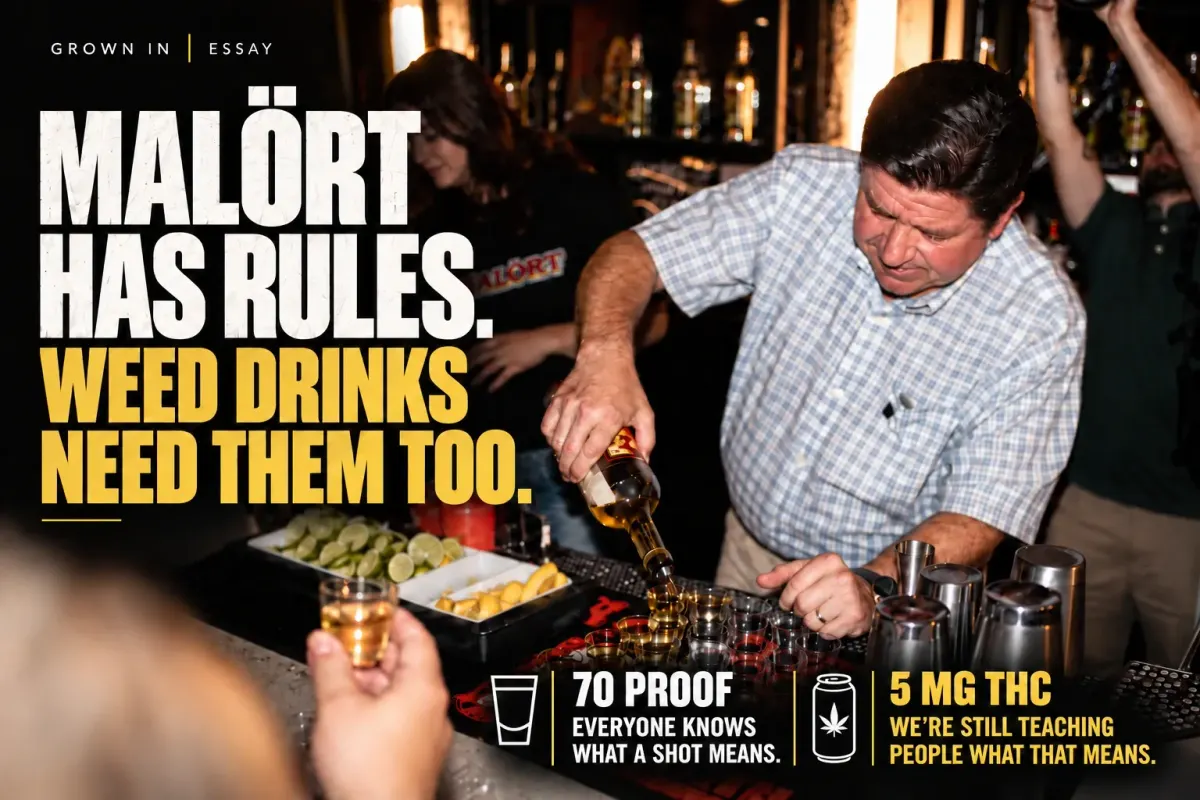
Last Sunday, Illinois Gov. JB Pritzker did something beautiful, disgusting and quintessentially Chicago.
He poured Malört.
More than 1,000 people gathered at Recess in the West Loop to simultaneously swallow a shot of Chicago’s notoriously bitter hometown spirit, setting a world record in the process. The governor himself showed up and helped pour the stuff.
Malört is 70 proof. It tastes, depending on your perspective, like grapefruit rind, gasoline, regret or civic pride. Yet nobody watching Pritzker fill those glasses screamed: Does the governor understand the potency of what he's handing these people?
Because everybody understands what a shot is.
That may be the most useful cannabis-policy lesson Chicago produces all year.
Consumers increasingly want to drink their weed. NielsenIQ says tracked THC-beverage sales reached $239 million over its latest 52-week measurement period, up 135 percent year over year. Half of U.S. adults surveyed expressed interest in trying a cannabis-infused beverage.
The consumer has moved.
Washington, as usual, is chasing from behind.
This week President Trump signed legislation giving much of the intoxicating-hemp industry another month before new federal restrictions kick in: December 11 instead of November 12. The law separately cracks down on synthetic hemp derivatives. Congress now has a tiny window to come up with something more intelligent than a near-ban on an entire emerging consumer category.
Good.
But our hemp friends shouldn't confuse don't ban this with don't regulate this.
There is a canna-cowboy argument I keep hearing that goes something like: You can walk into a liquor store and buy Everclear. Why shouldn't that same store sell whatever potency THC beverage a producer wants to put on the shelf?
Because the two substances arrive with radically different levels of consumer literacy.
We know what liquor does.
We have proof numbers, serving conventions, bartenders, liquor licenses, age checks and a couple centuries of American trial and spectacular error teaching us the difference between a beer, a glass of wine, a shot of Malört and drinking half a bottle of Everclear.
Cannabis has no equivalent language yet.
A new customer may genuinely not understand the experiential difference between 2.5, 5, 10, 25 and 50 milligrams of THC—or why drinking another can because the first one “isn't working” can turn a pleasant evening into an eight-hour hostage situation on your own sofa.
This isn't an argument against THC beverages.
It's an argument for treating consumers like adults by giving them information adults can actually use.
And, in its ongoing adolescence, the existing state-licensed cannabis industry knows something about doing that.
Illinois cannabis is hardly a model of perfect public policy. Its costs are absurd, its structure remains unnecessarily restrictive and its leadership class can still resemble a round of golf at Augusta National circa 1950.
Cannabis, of all industries, should have figured this out differently. Instead, too much of its power structure has managed to recreate the same gender, racial and capital imbalances we complain about in tech, private equity, AI and most everything else.
Still: safety became infrastructure.
Illinois-regulated cannabis requires testing, potency information, warning labels, child-resistant packaging and defined serving sizes. Those requirements are not abstract policy positions anymore. Cultivators, manufacturers, dispensaries and their employees have built businesses around them.
Don't throw that knowledge away.
The answer isn't hemp or cannabis.
It's hemp and cannabis, with rules proportional to the actual risk.
We love Texans like James Talarico making the larger case against reflexive THC prohibition. But “let adults have THC” is the beginning of the conversation, not the end.
So here's one possible Chicago compromise:
Let consumers drink their weed.
Let appropriately regulated THC beverages move beyond dispensaries into bars, restaurants, liquor stores, entertainment venues and other adult retail environments.
Give existing licensed cannabis operators—who have already invested millions learning how to manufacture, test, label and sell THC under regulation—a head start bringing compliant products into those channels.
And require any retailer serving intoxicating cannabis to complete some basic consumer-protection training.
Potency. Dosing. Onset. Age verification. Interactions. When to tell somebody they've had enough.
Impossible?
Chicago reversed a river.
We can probably teach a bartender what five milligrams means.
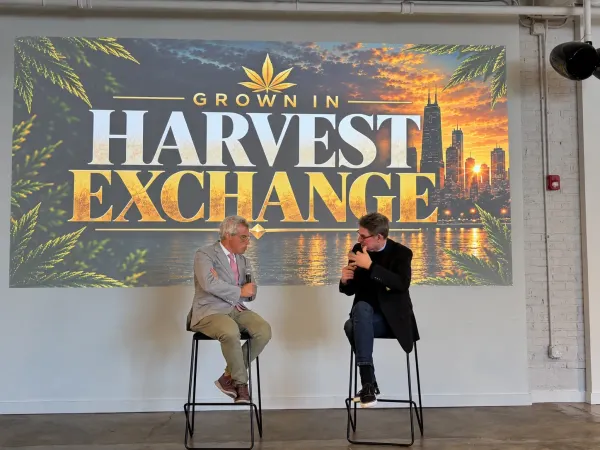
Which brings us to Grown In Harvest Exchange, October 8 in Chicago.
We're bringing licensed cannabis, hemp, retailers, policymakers, political voices and others into the room to try to model what functional rules for serving cannabis across different kinds of businesses might actually look like.
Not testimony.
Not another white paper.
Something usable.
Jack Palance called it the “one thing” in City Slickers. For those who did not spend the early 1990s watching Billy Crystal have a midlife crisis on VHS, call it the main character.
The consumer.
Protect the consumer and a surprising number of the other arguments get easier.
And because we're Grown In, we're not spending an entire October day pretending public policy can't also be fun.
There will be responsible product sampling, wholesale opportunities with licensed retailers, comedy, a session on what AI can actually do for cannabis businesses, and a town hall about Chicago's role in the global cannabis commercial and cultural community.
Washington has given us another month.
Consumers aren't waiting.
Neither should we.
The rules are being rewritten. Be in the conversation.