Show Me the Weed

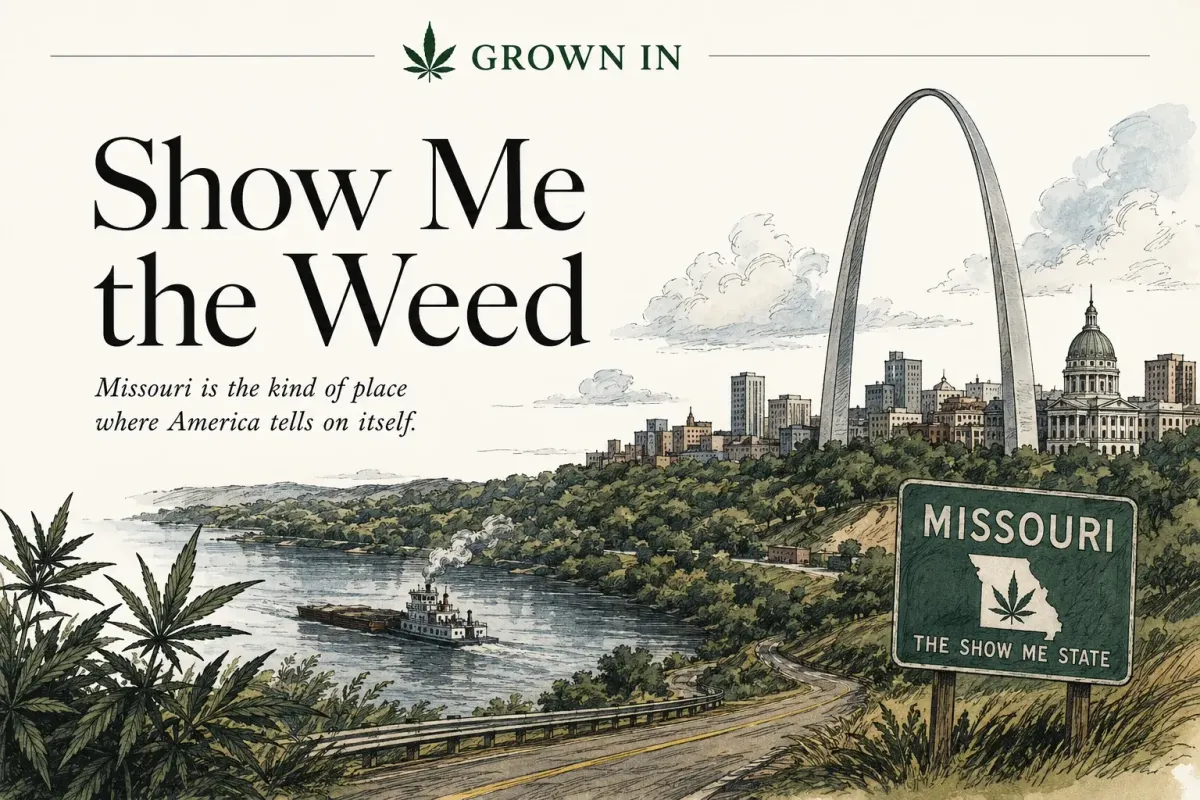
Missouri is the kind of place where America tells on itself.
It is red, Christian, libertarian, transactional, musical, river-bent, baseball-haunted, suspicious of government, fond of rules when the rules belong to somebody else, and perfectly capable of legalizing weed while still pretending it is shocked to find joints in the casino.
That makes it one of the most useful cannabis states in the country.
Not California, where cannabis can disappear into lifestyle haze. Not Illinois, where cannabis arrived with a thick binder, a governor’s signature, a social-equity promise, a zoning map, a lobbyist scrum, and a price point high enough to make Michigan look like Costco with terpenes. Missouri is stranger than that. It is not exactly permissive and not exactly punitive. It is not exactly free market and not exactly controlled. It is the Show Me State, which in cannabis means: show me the license, show me the loophole, show me the receipt, show me the tax revenue, show me the microbusiness owner, show me the predatory contract, show me the joint, show me the badge, show me the Venmo QR code, show me the Cardinals score.
Grown In has been watching Missouri since the middle of 2020, when medical cannabis was still a frontier town with better lighting. We visited cultivation facilities. We chronicled the buildout. We met operators before the adult-use stampede. We got to know people who mattered before the market became a market: Mitch Myers, Jason Nelson, Chad Carpenter, Giavonna Accurso, and plenty of others trying to figure out how a state with a libertarian streak, a churchgoing conscience and a taste for commerce would metabolize cannabis.
The answer, so far, is: unevenly, profitably, loudly, and maybe more honestly than Illinois.
Missouri is cheaper than Illinois. Missouri is growing. Missouri has bumps, lawsuits, revoked licenses, hard feelings and a social-equity class that has not yet become the moral answer its architects hoped it would be. Missouri also has something Illinois sometimes lacks: a certain shrugging practicality. People are going to consume cannabis. Some will buy it in dispensaries. Some will buy it as hemp. Some will buy it at bizarre little unlicensed bazaars where the vibes are half craft fair, half amateur Bonnaroo, and the cashier takes American Express with the calm of a dentist’s office.
That is not an endorsement. It is field reporting.
The question is whether Missouri is an exception — or a preview.
The Busch Question
Let’s start with the beer ghost.
When someone says “Augie Busch” and “weed” in the same sentence, St. Louis ears perk up for obvious reasons. Beer built the city’s global consumer mythology. Anheuser-Busch turned barley, logistics, advertising, distribution and sports into a civilization. Budweiser was not just beer. It was a national operating system with Clydesdales.
But the cannabis Busch appears not to be August Busch IV, the last Busch-family chief executive of Anheuser-Busch before the InBev takeover. The Busch-family cannabis operator to watch is Adolphus Busch, tied to Teal Cannabis and Current Cannabis in Missouri. That distinction matters, because cannabis media does not need another lazy dynasty story when the real one is more interesting.
The comparison to Ben Kovler should also be handled carefully.
Kovler is not a beer heir; he is the founder-operator-financier behind Chicago-based Green Thumb Industries, which helped define the multistate operator era and now has one foot in state-licensed cannabis and another in the hemp-derived THC beverage lane. The obvious overlap is not personality or pedigree. It is distribution imagination.
Beer taught America how to move intoxicants through culture.
Cannabis is now trying to decide whether it wants to learn from beer, become beer, replace beer, or sue beer for emotional damages.
The Busch thread in Missouri matters because St. Louis understands beverage infrastructure in its bones. The Kovler thread in Chicago matters because Green Thumb has shown that cannabis can be built like a serious national consumer company while still living under federal absurdity. Both stories point toward the same question: if cannabis is going to become ordinary, who owns the ordinary channels?
Dispensaries? Hemp beverage brands? Liquor distributors? Grocery stores? Arenas? Restaurants? State regulators? Congress? Or the consumer, who remains maddeningly uninterested in the category distinctions that keep lawyers employed?
That question becomes urgent because November is coming.
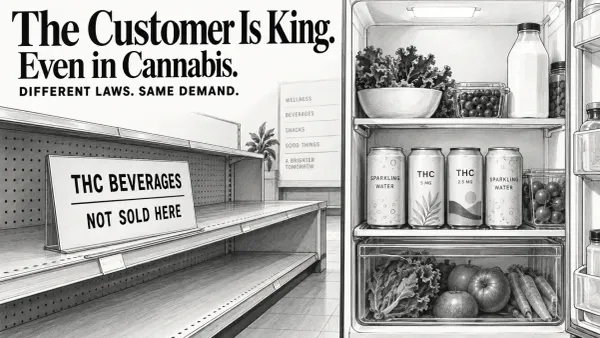
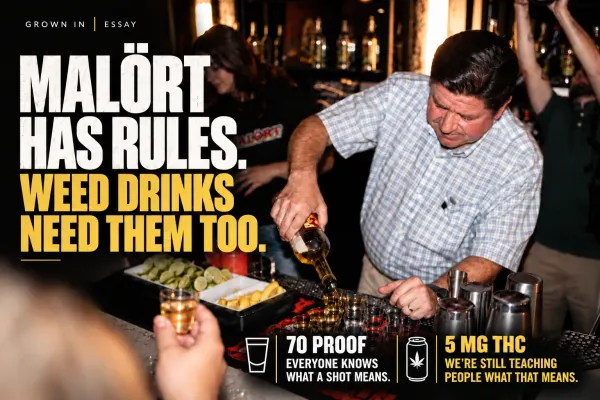
Missouri has moved to ban intoxicating hemp products outside the marijuana system. Congress has its own federal hemp reckoning set for November 2026. Somewhere between Rand Paul’s hemp-farmer libertarianism, Mitch McConnell’s anti-loophole discipline, state-licensed operator frustration, and consumer love for low-dose drinks, there is a national settlement trying to be born.
St. Louis is not a bad place to argue about it.
The Association and the Independent
Now, about MoCannTrade.
Every state cannabis market gets the trade association it deserves. Missouri’s is polished, disciplined, message-aware and not especially thrilled when independent media wanders off script. Andrew Mullins and Jack Cardetti know how to manage a narrative. That is their job. Grown In’s job is to respect the work without becoming house media.
This creates what diplomats call a “productive tension” and what editors call Tuesday.
We want to remain cordial. We also want to remain independent. Missouri deserves both. The licensed operators who built this market deserve serious coverage, not gotcha theater. The microbusiness applicants who were supposed to be included deserve serious scrutiny, not brochure language. The regulators deserve credit where credit is due and pressure where pressure is overdue. Consumers deserve to know why Missouri works better than Illinois on price and access, and worse than advertised on equity. Hemp operators deserve to be heard before they are erased. Licensed retailers deserve to explain why they believe hemp competitors have been playing a different game with fewer rules.
That is the middle ground.
Missouri’s microbusiness program is the sore spot that refuses to heal politely. On paper, it was designed to open doors for marginalized and underrepresented participants. In practice, the lottery structure and ownership arrangements created openings for exploitation, revocation and confusion. That does not mean the whole program is a fraud. It means the state tried to graft justice onto a gold rush and discovered, yet again, that capital reads social-equity language faster than social-equity applicants can hire lawyers.
Illinois knows this movie. Missouri just filmed it with a different soundtrack.
Still, Missouri’s adult-use market keeps growing because consumers do not wait for policy to become morally complete. They buy what is available, affordable and close. That is why Missouri may be more representative of the United States than any coastal cannabis story. It has legal stores and illegal ghosts. It has conservative voters and cannabis consumers. It has a regulated industry and a gray-market memory. It has rural suspicion and urban appetite. It has public-health concerns and personal-liberty arguments. It has social-equity promises and free-market workarounds. It has the whole American contradiction packed into one border state with excellent music.
Jazz, Joints and the DEA Picnic
Missouri’s cannabis story should never be told only through license counts.
St. Louis gave the world Miles Davis. Kansas City gave the world Charlie Parker. Chuck Berry gave the guitar a duckwalk and American adolescence a permanent electric charge. The Cardinals gave the city baseball religion. The 1904 World’s Fair gave St. Louis a mythology of modern spectacle, civic ambition and questionable snacks. Uncle Tupelo, just across the river in Belleville, helped invent alt-country by making Midwestern fatigue sound noble.
Cannabis belongs in that cultural map, not because every musician smoked weed, but because cannabis has always lived near improvisation, pain, policing, nightlife, migration and joy. Jazz understood altered time before the law did. Blues understood relief before pharma branded it. Baseball understood ritual before dispensaries hired retail consultants.
Then there is the other Missouri: the unlicensed bazaar, the mushroom table, the joint in plain sight, the payment app chirping while everyone pretends this is normal. Sometimes enforcement looks away. Sometimes the state gets embarrassed. Sometimes the DEA arrives like a bad weather system over a parking-lot jamboree and reminds everyone that American freedom is still very much subject to scheduling.
That is the Missouri paradox. It can feel enlightened and reckless on the same afternoon.
And maybe that is exactly why we should go there now.
November 19: The Space Between
On November 19 in St. Louis, the election will be over but the hemp deadline will still be hanging in the air.
That space matters.
The next Congress will be taking shape. Missouri’s U.S. House delegation will be freshly sorted. Senators Josh Hawley and Eric Schmitt will still represent a state whose voters legalized adult-use cannabis even as Republican politics remains cautious, conflicted and increasingly aware that cannabis is not going back in the bottle. Schmitt has at least gestured toward a federal framework that treats marijuana more like a regulated adult-use product than a forever-war substance. Hawley has been more limited, more medical, more Missouri-conservative. Neither man can ignore that his state has already crossed the bridge.
The hemp question will make avoidance harder.
Do Missouri Republicans side with licensed cannabis operators against intoxicating hemp? Do they side with hemp farmers and beverage entrepreneurs against federal overreach? Do Democrats find a more coherent language that protects public health without killing small businesses? Do state-licensed cannabis companies accept beverage normalization if the rules are fair? Do hemp companies accept testing, labeling, age-gating and accountability if it means survival?
And does St. Louis — beer town, baseball town, jazz town, river town, empire-of-distribution town — become one of the places where the next cannabis compromise is made visible?
That is the bet.
Not a conference in the dead language of conferences. Not another panel where everyone says “education” until the bar opens. A working room. A cultural room. A political room. A commercial room. A room where licensed operators, hemp beverage people, bankers, growers, retailers, lawyers, musicians, journalists, trade association folks, skeptics, reformers, veterans and the occasional benevolent troublemaker can sit inside the contradiction and call it market intelligence.
Missouri is not perfect. Good. Perfect states make boring columns and worse policy.
Missouri is useful because it is messy in the same ways America is messy. It legalized weed without becoming liberal. It built a market without resolving equity. It sells cheaper cannabis than Illinois without eliminating frustration. It tolerates certain informal freedoms until it doesn’t. It contains both the beer dynasty and the weed upstart, the jazz ghost and the compliance memo, the church pew and the gummy, the Cardinals cap and the mushroom table.
Show me the weed, Missouri says.
Fine.
But show me the rules, too. Show me the people who got left out. Show me the operators who survived. Show me the beverage aisle before Congress shuts it down. Show me the social-equity license that became a real business. Show me the trade association and the independent press in the same room, cordial and uncomfortable. Show me whether a red state that already legalized cannabis can help America stop lying to itself about cannabis.
November 19. St. Louis.
Let’s party, but let’s take notes.