A Declaration for the Rest of Us

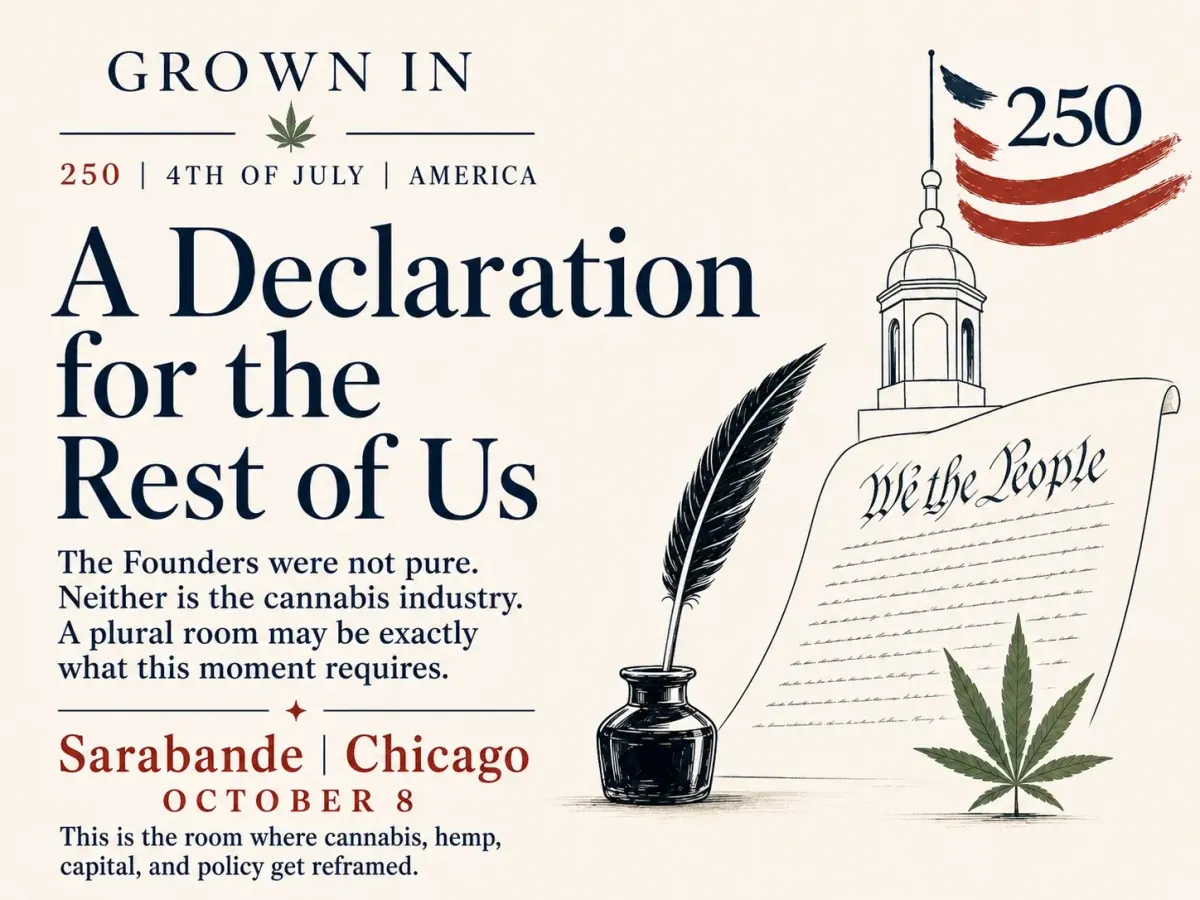
The Founders were not pure. Neither is the cannabis industry. That may be exactly why a plural room — contradictions, egos, incentives and all — is necessary now.
The signers of the Declaration of Independence were not saints.
This is important to remember before the 250th birthday party gets too polite.
They were lawyers, merchants, farmers, printers, physicians, slaveholders, abolitionists, deists, Christians, smugglers, strivers, land speculators, provincial celebrities, political operators, and men with enough ego to believe that history might remember their names.
John Hancock did not sign small.
He signed like a man who understood both branding and treason.
The mythology makes them marble. The document makes them human. The Declaration of Independence was not born from a room of morally complete people arriving at morally complete consensus. It was born from a room of ambitious, frightened, contradictory, self-interested, historically alert people who recognized that doing it the old way had become more dangerous than attempting the impossible.
That is the part worth recovering in 2026.
Not the powdered wigs. Not the parchment cosplay. Not the civic greeting-card version of courage. The useful inheritance is the structure: a plural room, a shared grievance, a public declaration, and enough mutual risk to make the words matter.
Which brings us, naturally and somewhat absurdly, to cannabis.
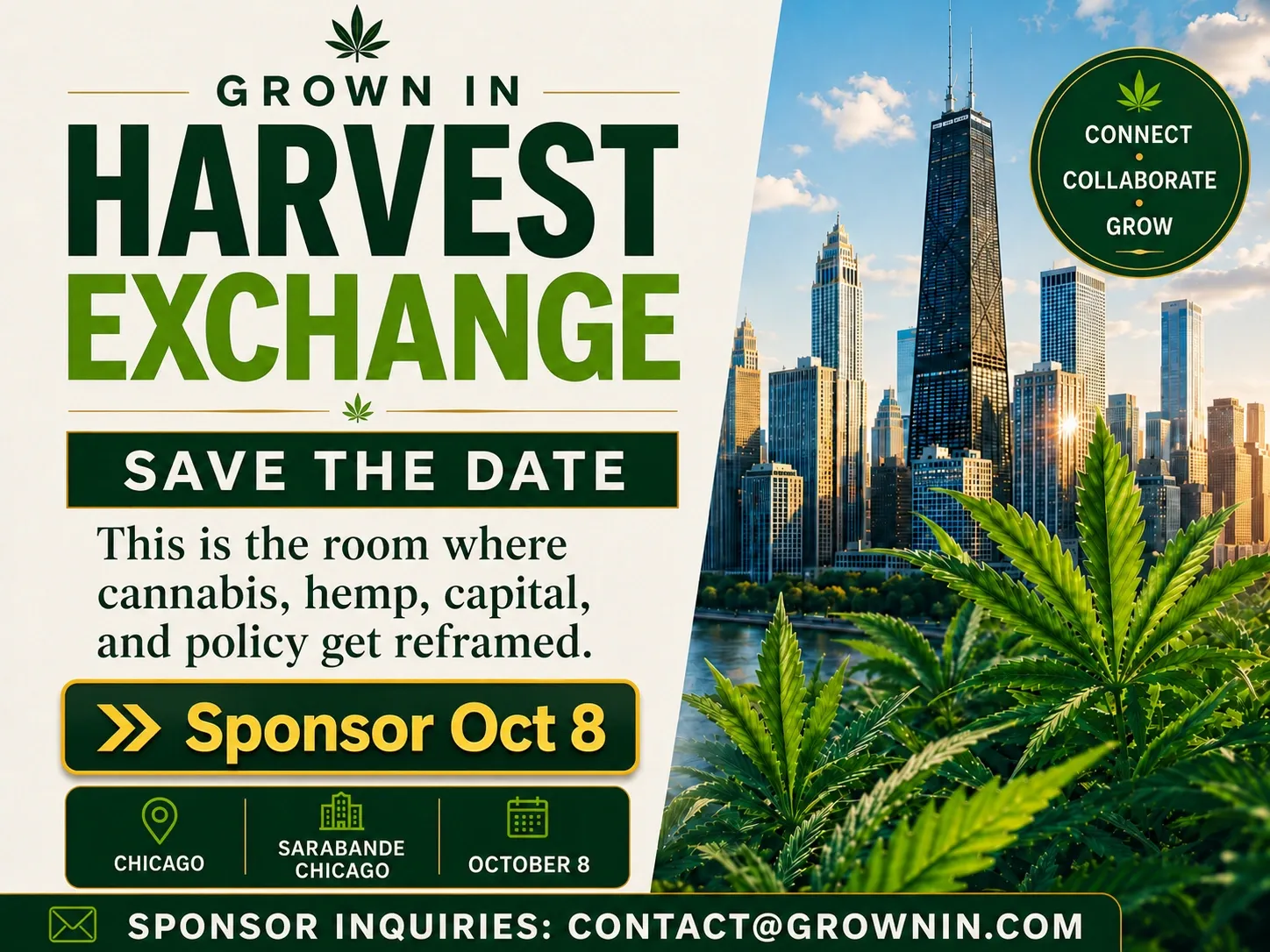
On October 8, inside the Harvest Exchange and alongside the Project Middle Ground experiment, the cannabis industry has a chance to do something more serious than host another panel, stage another networking reception, or ask once again whether federal reform is finally around the corner.
It has a chance to declare something.
Not independence from law. Not independence from public health. Not independence from taxes, responsibility, age-gating, science, local control, or the ordinary obligations of commerce.
Independence from the inherited idea that cannabis is inherently bad.
That idea has governed American policy for nearly a century. It did not emerge from neutral science. It was assembled from racial panic, religious anxiety, fear of intoxication, fear of immigrants, fear of Black and brown culture, fear of youth, fear of pleasure, fear of plants, fear of medicine outside approved channels, and fear that ordinary people might choose something other than alcohol, tobacco, pharmaceuticals, prayer, or silence to manage pain, joy, sleep, trauma, celebration, and being alive.
The idea has been modified, softened, monetized, and rebranded. But it has not been defeated.
That is why the room has to be wider than cannabis.
The Declaration was not signed by men with identical incentives. That was the point. The power came from the collision of incentives disciplined into a common text.
Cannabis needs that kind of room.
MSO CEOs who know Chicago boardrooms and Springfield hallways.
Social equity operators who know what it feels like to be promised an industry and handed a maze.
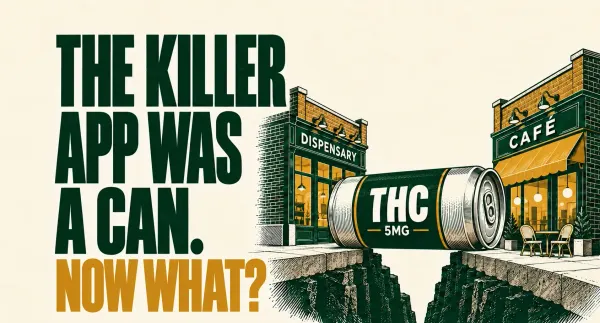
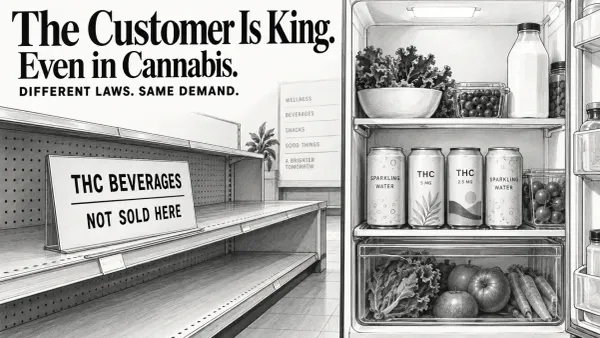
Hemp beverage founders who believe THC can live in coolers, restaurants, grocery stores, liquor stores, and normal adult ritual.
Old beverage and tobacco people who understand distribution, indulgence, risk, lobbying, and the difference between what Americans say they want regulated and what they actually buy.
Farmers who understand that plants become policy only after they become crops.
Bankers who do not need to love cannabis to recognize that pretending a multibillion-dollar industry should operate without normal financial services is a civic failure.
Artists who understood cannabis before consultants discovered “the culture.”
Public health people who can distinguish between risk and panic.
Republicans who believe markets should not be strangled by federal contradiction.
Democrats who believe legalization without repair is not justice.
Libertarians, including the Rand Paul wing of American life, who can remind everyone that adults do not become freer when the state treats them like children.
Labor, medicine, veterans, clergy, parents, patients, scientists, mayors, county officials, retailers, legacy operators, and the newer generation of public officials — including leaders like Juliana Stratton — who increasingly inherit the contradiction without having created it.
The point is not that these people agree.
They do not.
Good.
A declaration signed only by people who already agree is not a declaration. It is a newsletter.
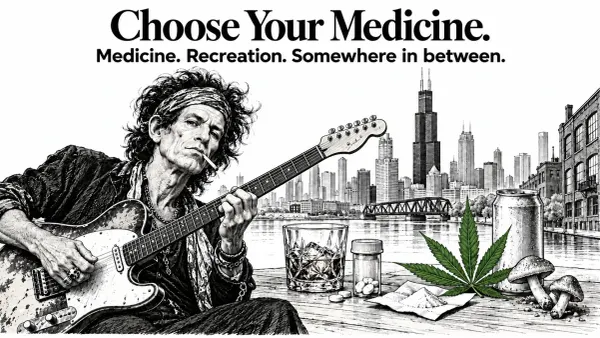
The cannabis room should be uncomfortable because America is uncomfortable. Hemp and licensed cannabis are uncomfortable. Medicine and intoxication are uncomfortable. Equity and consolidation are uncomfortable. Farming and finance are uncomfortable. Public health and pleasure are uncomfortable. Beer, weed, spirits, tobacco, opioids, SSRIs, gummies, seltzers, vapes, tinctures, cigarettes, prayer, yoga, coffee, and football are all part of the same American argument about how people regulate themselves when the day is too long and the body is too loud.
Cannabis is not outside that argument.
Cannabis is proof the argument was never honest.
The country has always had intoxicants it tolerates, intoxicants it celebrates, intoxicants it taxes, intoxicants it prescribes, intoxicants it racializes, intoxicants it moralizes, and intoxicants it pretends are not intoxicants because the packaging is familiar.
Beer became heritage.
Wine became sophistication.
Whiskey became Americana.
Tobacco became a crop, a cancer, a settlement, and a lobby.
Pharmaceuticals became medicine, even when medicine became dependency.
Cannabis became a crime.
That distinction deserves scrutiny as America celebrates 250 years of liberty and begins, whether it wants to or not, to imagine 500.
A serious cannabis declaration would not say cannabis is harmless. That would be false, boring, and politically useless.
It would say something more adult: cannabis is real.
It is agriculture. It is medicine. It is intoxication. It is culture. It is commerce. It is risk. It is relief. It is work. It is tax revenue. It is criminal justice. It is religion for some, recreation for others, and a decent night’s sleep for many people who do not care what the industry calls itself.
It is also a mirror.
It reflects who gets punished and who gets licensed.
Who gets called a criminal and who gets called an entrepreneur.
Who gets a wellness brand and who gets a record.
Who gets access to capital and who gets a social equity webinar.
Who gets invited into the governor’s office and who gets told the rules are complicated.
Who gets to sell intoxication in a stadium and who gets raided for selling a plant.
This is where the Founders are useful, if we can resist turning them into mascots.
The American experiment was born in contradiction. Liberty and slavery. Natural rights and property rights. Enlightenment and empire. Deism and doctrine. Heroism and hypocrisy. The sacred language of equality written by men who did not practice it.
And yet the document mattered.
That is the hard lesson. Contradiction does not automatically invalidate a declaration. Sometimes contradiction is the reason a declaration is necessary.
Cannabis does not need a pure room.
There is no pure room.
The MSO CEO has incentives. The hemp beverage founder has incentives. The social equity licensee has incentives. The banker has incentives. The regulator has incentives. The politician has incentives. The farmer has incentives. The artist has incentives. The veteran has needs. The patient has needs. The consumer has habits. The lobbyist has clients. The journalist has questions. The sponsor has an invoice. The organizer has a venue deposit.
Fine.
The signers had incentives too.
The question is whether people with different incentives can still recognize a shared danger.
In 1776, the danger was continuing under a system that no longer allowed political maturity.
In 2026, the danger is continuing under a cannabis settlement that no longer allows policy maturity.
Federal illegality with state legalization is not maturity.
A hemp loophole war with no coherent national consumer standard is not maturity.
Social equity without durable operating support is not maturity.
Public health rhetoric selectively applied to protect existing market positions is not maturity.
Banking restrictions that force ordinary businesses into extraordinary contortions are not maturity.
Tax policy that treats licensed cannabis operators as if they are traffickers while states depend on their revenue is not maturity.
Pretending cannabis is either a miracle plant or a gateway drug is not maturity.
America at 250 should be old enough to do better.
That does not mean everyone gets what they want.
A real declaration would disappoint everyone a little. That is how you know it is serious.
Licensed cannabis would have to admit that consumers want convenience, price fairness, and product formats that do not always begin at the dispensary door.
Hemp would have to admit that intoxicating products require real age gates, testing, labeling, accountability, and rules that cannot be optional just because the molecule entered through a different statutory door.
Large operators would have to admit that market survival cannot be the only moral argument.
Social equity advocates would have to admit that symbolism without operating discipline, capital structure, and market access does not build enduring businesses.
Regulators would have to admit that “not our authority” may be legally accurate and still civically inadequate.
Politicians would have to admit that cannabis is no longer a ribbon-cutting issue. It is tax policy, banking policy, farm policy, health policy, labor policy, criminal justice policy, and interstate commerce policy.
Investors would have to admit that a lot of cannabis pain was not caused by bad founders but by impossible structures.
Founders would have to admit that a noble origin story does not replace execution.
Everyone would have to admit that the culture got here first.
That may be the most American part of the whole thing.
Before the lawyers, before the lobbyists, before the SPAC decks, before the MSO earnings calls, before the hemp seltzers, before the state social equity applications, before the celebrity brands, before the seed-to-sale systems, before the conference lanyards, before the carefully worded LinkedIn posts, people used the plant.
They used it when the law was wrong.
They used it when medicine would not listen.
They used it when grief was heavy.
They used it when the music was good.
They used it when the state called them criminals and the market had not yet discovered them as consumers.
The room owes those people more than nostalgia.
It owes them honesty.
A Cannabis Declaration at 250 would not need to be long. The original was not long because the Founders were short on grievances. They had plenty. It was short because the form demanded clarity.
Here is the clarity available now:
Cannabis is not inherently bad.
Adults are not children.
Consumers deserve safety, truth, and choice.
Patients deserve access.
Communities harmed by prohibition deserve more than commemorative language.
Farmers deserve coherent rules.
Operators deserve normal banking and rational taxation.
Hemp and licensed cannabis deserve a framework that protects consumers without pretending one side is pure and the other illegitimate.
Public health deserves seriousness, not selective deployment.
States deserve federal coherence.
The industry deserves standards.
The culture deserves respect.
The country deserves to stop lying.
That is not a marijuana manifesto.
That is a civic modernization agenda.
The mistake would be to make October 8 too cute. The second mistake would be to make it too solemn. America is too strange for solemnity alone. Cannabis is much too strange.
The right tone is straight-faced satire with actual stakes.
The Graduate, but for a country aging into its own contradictions.
One word, Benjamin: cannabinoids.
Or maybe not one word. Maybe several.
Beer. Hemp. Farming. Banking. Justice. Medicine. Intoxication. Deism. Commerce. Repair. Pleasure. Federalism. Adults.
Maybe the future is not plastics.
Maybe the future is admitting that the old moral categories no longer work.
The 250th anniversary of the United States will produce many speeches about freedom. Most will be forgettable because freedom, as a word, has been polished smooth by people who do not risk much when they say it.
The Declaration still has force because the signers risked something real. Their fortunes. Their reputations. Their necks. Their internal contradictions.
Cannabis leaders are not being asked to risk that.
No one is asking a beverage founder, an MSO CEO, a social equity operator, a banker, a farmer, a senator, a regulator, an artist, or a former tobacco executive to ride out against the Crown.
But the industry can risk a little honesty.
It can risk sitting in the same room without pretending the room is aligned.
It can risk naming the inherited lie.
It can risk saying that the plant is not the problem.
It can risk admitting that the problem is the country’s long, selective, racialized, religiously inflected, commercially convenient confusion about which forms of relief and intoxication are respectable, which are taxable, which are medical, which are sinful, and which are crimes.
It can risk a plural voice.
Not one voice. One voice is usually code for whoever paid for the microphone.
A plural voice.
A room wide enough to hold contradiction. A document disciplined enough to make contradiction useful. A congress small enough to be real and large enough to matter.
That is the Project Middle Ground experiment inside the Harvest Exchange.
Not a trade show.
Not a protest.
Not a lobbying day.
Not a salon for people who already agree.
A civic room for an industry that has outgrown the stories used to contain it.
At 250, America should be able to look back at the Declaration without pretending the Founders were pure.
At 500, perhaps the country will look back at cannabis prohibition and wonder why it took so long to admit the obvious.
In the meantime, someone has to draft the thing.
Someone has to call the room.
Someone has to let the egos in without letting ego run the room.
Someone has to give Hancock his space and still make sure everyone else signs.
Contradictions and all.
Especially contradictions and all.