Booze and Pills and Powders — You Got to Choose Your Medicine

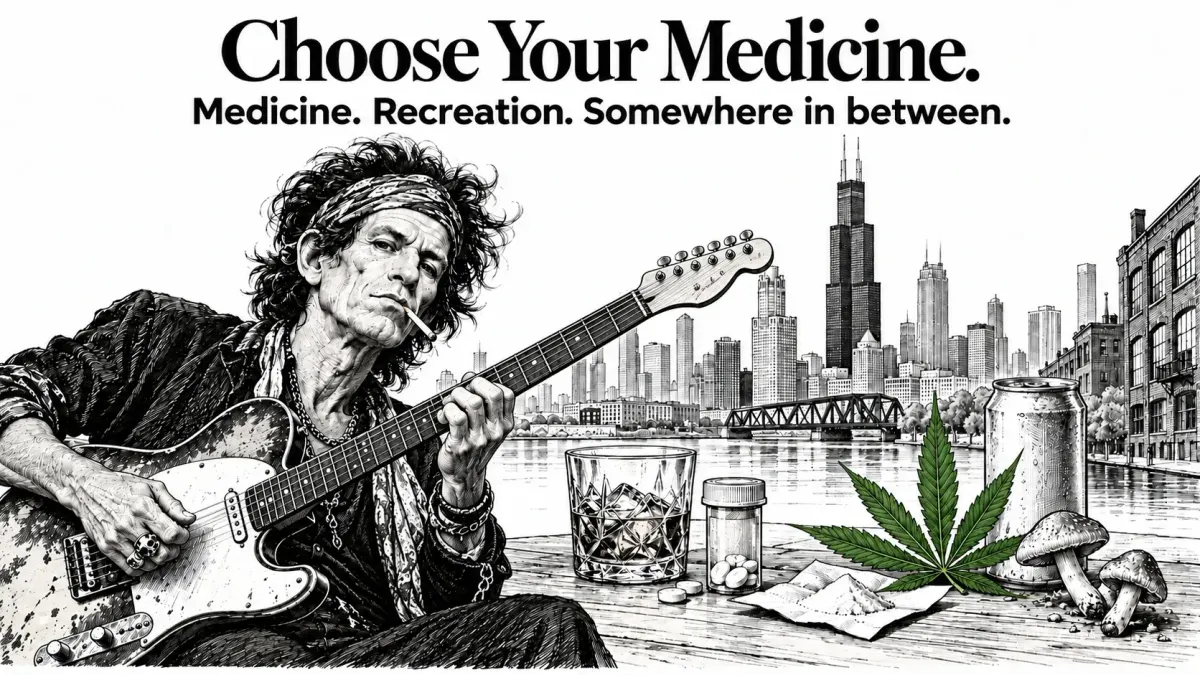
Keith Richards had a line for this.
“Booze and pills and powders” — you got to choose your medicine.
That was 1978. Some Girls. “Before They Make Me Run.” Keith being Keith, which generally meant surviving things that would have killed the rest of us while somehow emerging with a riff.
Now add cannabis.
Nearly fifty years later, Donald Trump’s federal government appears increasingly determined to recognize marijuana as something the federal government has spent generations insisting it is not:
Medicine.
Trump directed the Attorney General to move the existing marijuana rescheduling process toward Schedule III, which would recognize a currently accepted medical use under federal law. This week delivered another procedural setback at DEA and could push the process into 2027. But directionally, something remarkable is happening.
After decades of classification shaped by politics, culture, enforcement and, yes, race, the federal government is being forced toward a more scientific conversation about a plant humans have used medicinally for thousands of years. Cannabis appears in medical traditions stretching back to ancient China and other civilizations long before television commercials warned us to ask our doctors whether the latest molecule was right for us.
Great.
Commercially?
Hmmm.
Because calling cannabis medicine solves one problem while potentially sharpening another.
Schedule III could provide enormous relief to state-licensed cannabis operators, most obviously from federal tax code Section 280E, which has prevented businesses trafficking in Schedule I or II substances from taking ordinary business deductions.
For companies bleeding cash while paying tax rates that would make Keith Richards sober, that matters.
But a medicine-first federal framework also risks placing recreational cannabis in a strange second-class lane.
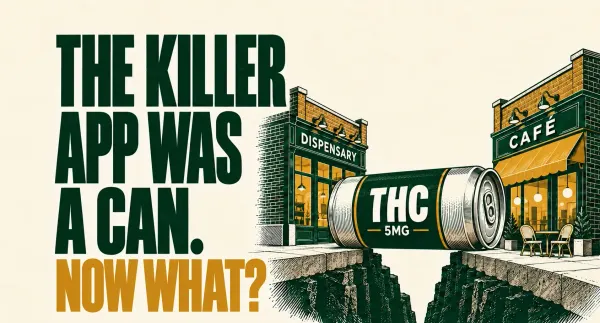
And simultaneously, another lane is literally being cleared off store shelves.
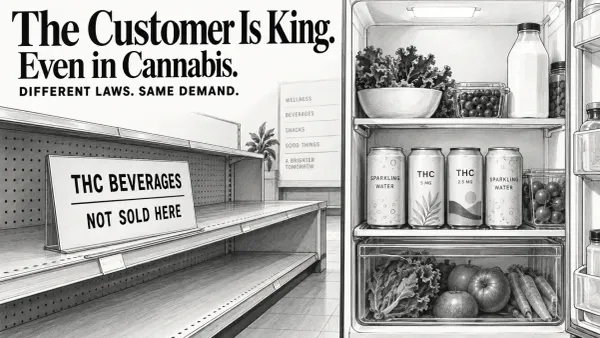
Walk into Binny’s in Chicago right now and THC beverages are being discounted ahead of Illinois’ November 12 deadline. Beginning then, intoxicating hemp products effectively migrate into Illinois’ regulated cannabis system rather than remaining products you can casually buy at liquor stores, bars and other mainstream retailers. Nationally, new federal hemp restrictions are also bearing down on the category.
Which is fascinating because THC beverages may represent one of the clearest examples we have of normal people telling regulators what they actually want.
Low-dose cannabis drinks put THC into a form Americans understand.
A can.
At dinner.
At a concert.
At the game.
Maybe instead of three beers.
Maybe alongside one.
Maybe because you don’t drink alcohol anymore.
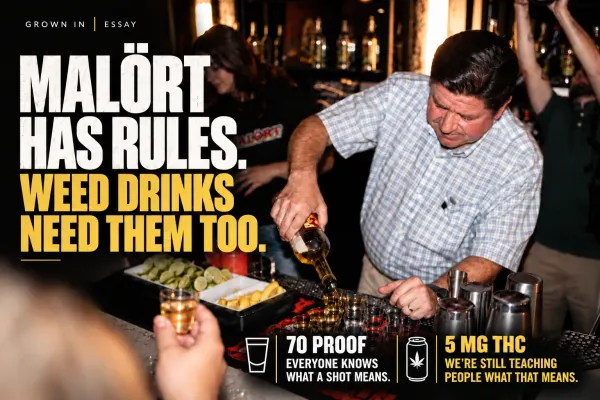
Maybe because five milligrams gets you exactly where you want to be and twenty-five milligrams sends you into negotiations with the ceiling fan.
These are precisely the questions we should be studying in a legal, regulated environment.
Dosage.
Tolerance.
Interaction with alcohol.
Driving impairment.
Long-term health effects.
Consumer behavior.
Instead, we are potentially removing a product that mainstream consumers finally became comfortable experimenting with while simultaneously celebrating federal recognition of cannabis as medicine.
So perhaps the market is sorting itself into lanes.
Medicine: increasingly centered inside regulated dispensaries and, eventually, federally recognized therapeutic pathways.
Illinois is leaning hard into this lane. In September, the state allowed 37 additional existing recreational dispensaries to begin serving registered medical patients. That means more consumers can walk into the same store either as an adult-use customer or as a registered patient receiving medical tax treatment and other benefits.
Good.
Recreation: flower, vapes, edibles and beverages consumed because — radical concept — adults sometimes enjoy altering their consciousness.
We already know this market exists.
Drive 70 miles east of Chicago to New Buffalo, Michigan — the Gurnee Mills of Marijuana — and the parking lots full of Illinois plates provide reasonably strong qualitative evidence. New Buffalo has become a border bazaar built around selection and prices Illinois consumers apparently find difficult to resist.
And then there is the third lane.
The Middle.
Those of us who once had dealers who are now, according to a friend, considerably more excited about chocolate mushrooms.
People who use cannabis recreationally sometimes, medicinally sometimes, and frequently could not tell you where one stops and the other begins.
Did you take the gummy because your back hurt?
Because you couldn’t sleep?
Because dinner was more fun?
Because you were anxious?
Because the Grateful Dead sounded better?
Yes.
Our vocabulary never caught up with our behavior.
Those of us raised on Nancy Reagan and fried eggs in pans learned that Drugs Were Bad.
Then pharmaceutical America taught us that drugs advertised during football games could make us thinner, happier, harder, sleepier, calmer and apparently capable of kayaking through retirement.
Now Eli Lilly — the company riding the enormous success of drugs including Zepbound — has acquired AtaiBeckley for $2.8 billion upfront and as much as $1 billion more, planting one of Big Pharma’s biggest flags yet in psychedelic medicine. AtaiBeckley is developing rapid-acting neuroplastogen treatments, including a 5-MeO-DMT-based therapy for treatment-resistant depression.
Read that sentence again.
We have moved from:
This is your brain on drugs.
To:
Please remain under medical supervision while the drugs reorganize your brain.
Progress!
Illinois, meanwhile, has created research infrastructure of its own. UIC’s Cannabis Research Institute is now distributing seed funding for cannabis research and community projects. Other states and universities are constructing similar scaffolding. The dollars remain tiny compared with pharmaceutical research, but tiny is better than zero.
Medicine.
Recreation.
Research.
Hemp.
Psychedelics.
Dispensaries.
Liquor stores.
Pharmaceutical companies.
The FDA.
The DEA.
State regulators.
Consumers.
Everybody owns a piece of this elephant.
Nobody owns the elephant.
And somebody, somewhere, sometime needs to figure this shit out.
Fortunately, that is exactly what we intend to do Thursday in Avondale.
Grown In — a Chicago startup increasingly focused on cannabis and alternative medicine — is bringing together operators, researchers, policymakers, investors, employers and consumers to begin rewriting the rules in a very Chicago way.
Reverse-the-river stuff.
Not because we know the answers.
Because the existing categories increasingly make no sense.
The interesting opportunity in cannabis is no longer simply legalization.
It is figuring out what comes after legalization — when a plant can simultaneously be medicine, recreation, consumer packaged good, agricultural commodity, research subject and cultural artifact.
That conversation needs people from every lane.
Especially the middle.
Join us Thursday on Chicago’s North Side, near the Wilco Loft, and be in the room where the magic happens.
Mushrooms or otherwise.
As Keith put it later in the same song:
I wasn’t looking too good.
But I was feeling real well.
Actually, I’m looking OK.
Before they make me run.