Our Elected Officials Should Be Able to Walk, Talk and Chew Gummies at the Same Time

Grown In, revisited—and an invitation to help us work through the November 12 cannabis collision on October 8.
“Walk in the sunshine.”
Bob Weir and John Perry Barlow released the song on Ace in 1972. Its larger point is that consequential movements are built from countless small motions—some visible, some absurd, some impossible to control.
Cannabis in 2026 is that kind of movement.
Small and grand. Commercial and cultural. Regulated and improvisational. Medical, recreational, intoxicating, therapeutic, fashionable, stigmatized and increasingly ordinary—all at the same time.
Frontier industries always attract oddballs.
The early web had dial-up prophets explaining that every business would someday be an internet business. The early-2000s nanotechnology boom had scientists, investors and professional futurists promising to rearrange civilization one molecule at a time. Quantum has physicists, entrepreneurs, national-security strategists and civic boosters trying to describe a technology before most people can explain the existing computer in their pocket.
Cannabis has growers, patients, lobbyists, legacy operators, medical advocates, consumer-packaged-goods veterans, social-equity entrepreneurs, public-company executives, bartenders, beverage makers and people who simply enjoy a mild buzz without drinking four beers.
They do not always agree.
That does not mean they are not part of the same movement.
Things have been bleak. Things are also moving.
The legal cannabis industry has spent years carrying its frontier burdens: punishing taxes, difficult access to capital, inconsistent enforcement, compressed margins, state-by-state fragmentation and lawmakers who often understand only the small section of the system immediately in front of them.
And now, almost without warning, several major policy and cultural currents are converging.
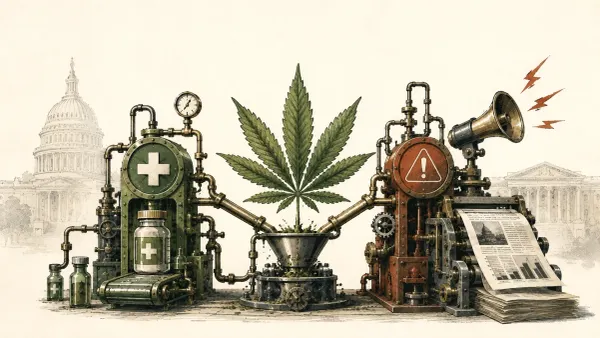
The Trump administration has placed FDA-approved marijuana products and cannabis sold through qualifying state medical programs into Schedule III. A broader federal proceeding is considering whether marijuana generally should move from Schedule I to Schedule III. This is meaningful federal recognition—but it is not legalization, and it does not resolve the adult-use conflict.
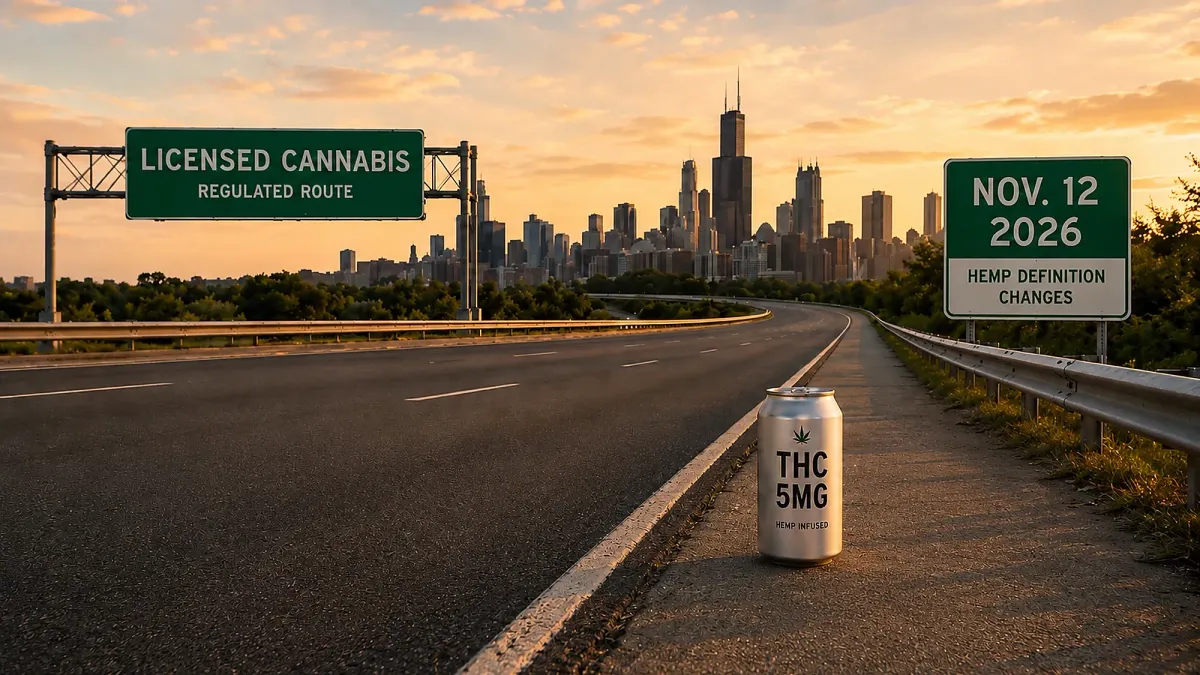
At the same time, the federal government has rewritten the definition of hemp. Beginning November 12, 2026, products containing more than 0.4 milligrams of total THC per container will generally fall outside the federal hemp definition. Illinois has now aligned its own framework with that deadline through legislation signed by Gov. J.B. Pritzker.
And next door to all of this, Lollapalooza will sell adults 12-ounce, nonalcoholic margaritas containing five milligrams of hemp-derived THC at select bars in Grant Park.
That is the American cannabis system in one paragraph:
The product is entering the mainstream just as the legal pathway beneath it is scheduled to disappear.
Consumers have already voted
Lawmakers are still arguing over whether the 2018 Farm Bill created a loophole, an accidental drafting gap or an entirely new consumer-products industry.
Consumers appear less confused.
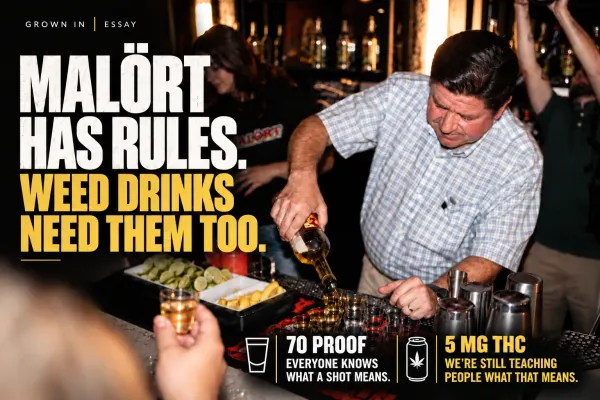
Many adults enjoy a low-dose THC beverage in a familiar 12-ounce can. They appreciate being able to buy one at a restaurant, music venue, liquor store, neighborhood market or arena without making a separate trip to a dispensary.
That does not answer the regulatory question. It does make the commercial and cultural question difficult to ignore.
These drinks are already becoming line items for restaurants, retailers, distributors, breweries, entertainment venues, consumer brands and publicly traded cannabis companies. Beverage interests are organizing and lobbying to preserve a regulated lane before the federal deadline arrives.
The marketplace is moving faster than the legislation.
Again.
The licensed industry has a point
Illinois’ licensed cannabis operators accepted a very different bargain.
They paid substantial fees. They built secure facilities. They navigated zoning, testing, transportation, packaging, ownership, financing and reporting rules. They endured delays, litigation, taxation and political promises that did not always arrive on schedule.
The hemp-derived THC industry entered through a different door.
Some of its entrepreneurs built serious businesses with testing, labeling, age verification and missions grounded in wellness and harm reduction. Others simply saw an opening and moved through it as rapidly as possible.
That is capitalism. It is also an uneven playing field.
A durable settlement should not require every newer hemp business to disappear. Nor should it render the licensed operators who absorbed years of compliance costs into suckers for having followed the rules.
The people who built the regulated road should not be run over by traffic using the shoulder.
Any workable system will need to address:
- Age verification and responsible marketing.
- Testing, labeling, dosage and traceability.
- Appropriate access through restaurants, stores, venues and dispensaries.
- A commercially viable role for licensed cultivators, infusers, craft growers and retailers.
- Fair pathways for responsible hemp-beverage companies.
- Public health, impaired driving and consumer education.
- Social equity and the promises embedded in Illinois legalization.
That requires more than one lobby, one legislative committee or one industry segment protecting its turf.
Walk, talk and chew gummies
I have asked elected officials straightforward questions about what happens on November 12.
Many have avoided answering.
To be fair, government is not wired to solve a problem involving agriculture, cannabis, alcohol, restaurants, public health, entertainment, zoning, law enforcement, consumer products, federal drug policy and interstate commerce simultaneously.
But our elected officials should be able to walk, talk and chew gummies at the same time.
They currently cannot.
Fortunately for them—and perhaps unfortunately for the rest of us—Chicago has one of the country’s deepest concentrations of people who actually understand pieces of this system.
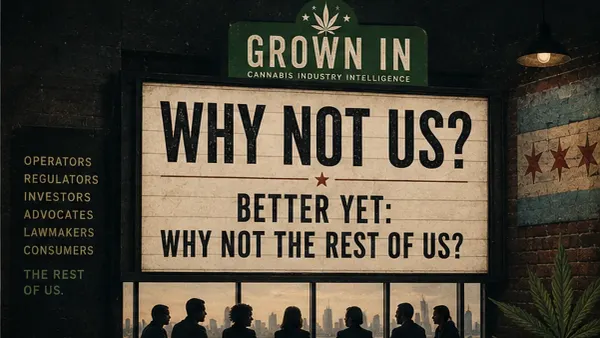
Licensed operators. Hemp companies. Lawyers. Regulators. Investors. Researchers. Healthcare professionals. Hospitality leaders. CPG executives. Community advocates. Journalists. Technologists. Patients. Consumers.
The knowledge exists.
The room does not.
Grown In, revisited
This is the assignment for Grown In through the remainder of 2026.
Not to pretend that we possess the answer.
Not to manufacture consensus where none exists.
Not to host another conference where speakers recite positions everyone already understands and disappear before the difficult conversation begins.
Grown In is now operating through the methodology of Project Middle Ground:
Media as translator. Convening as an operating system. Celebration and deliberation in the same room.
Project Middle Ground is not political centrism. It is the practical work of bringing stakeholders with different incentives into contact with the whole system.
A relevant aside: Pritzker and Trump agree on almost nothing, yet both have moved toward tighter intoxicating-hemp rules. They also independently treat quantum as strategic infrastructure—Pritzker through Illinois’ quantum park and Trump through new national strategy and security directives. Frontier industries create alignments that the conventional political map cannot adequately explain.
That is where the middle ground becomes interesting.
October 8: Harvest Exchange and Cannabis Congress
On October 8 in Chicago, Grown In will convene the Harvest Exchange and Cannabis Congress.
This will not be a coronation.
It will be a harvest: a chance to recognize what people have built, surface what is ripening and separate it from what has gone rotten.
It will also be a congress: people representing competing interests assembling to deliberate, negotiate and begin constructing practical next steps.
Among the subjects on the docket:
The November 12 beverage collision
What will federal and Illinois enforcement mean for products already being sold in restaurants, stores, arenas and festivals?
Does a five-milligram beverage deserve a regulated commercial pathway? Who should manufacture it, test it, distribute it, insure it and sell it? How should licensed cannabis operators participate in the market they helped make culturally possible?
Public consumption and cannabis hospitality
What could compliant cannabis access look like across dispensaries, restaurants, hotels, venues, private events and future hospitality concepts?
Chicago contemplated licensed on-site consumption years ago. The cultural marketplace has continued developing while the operating framework has remained incomplete.
AI and the cannabis industry
In generative AI, hallucination is not simply a defect. It emerges from the probabilistic nature of the system.
In cannabis AI, however, “hallucination” is too often a sales strategy.
We will call bullshit on THC-flavored AI theater while identifying where the technology can genuinely improve compliance, research, forecasting, cultivation, healthcare, manufacturing and consumer understanding.
Going global from Chicago
Chicago is an applications town.
We do not farm all the meat. We turn it into products, brands, markets, standards, distribution systems and public rituals.
Perhaps Chicago can become the long-term bud butcher to the world: not necessarily the place where cannabis originated, but the place where a complex frontier industry becomes legible, commercial, institutional and global.
Festivus in practice
We already have participation developing across:
- Lawmakers and aspiring public servants.
- Licensed cannabis and hemp-industry advocates.
- Media and Project Middle Ground translators.
- Hospitality, consumption and cultural innovators.
- Lawyers, investors, researchers and institutional partners.
- The back rooms where the sensimilla sausage is made.
This week, our Grown In LinkedIn galleries have documented both sides of the emerging culture:
At McCormick Place, cannabis meets lawmakers, institutions and compliance.
In Wrigleyville, it meets Cubs baseball, gravity bongs, Volcano bags, vapes, joints and a pickle-tasting gummy.
Different rooms.
Same movement.
On October 8, we begin putting the rooms together.
Attend. Participate. Sponsor. Bring a position—and enough curiosity to hear why someone else has one.
Participate in the October 8 Grown In Harvest Exchange
We are still learning what is right and what is wrong.
We might as well do it together.
—Brad