The Next Great Cannabis Product Is Knowledge

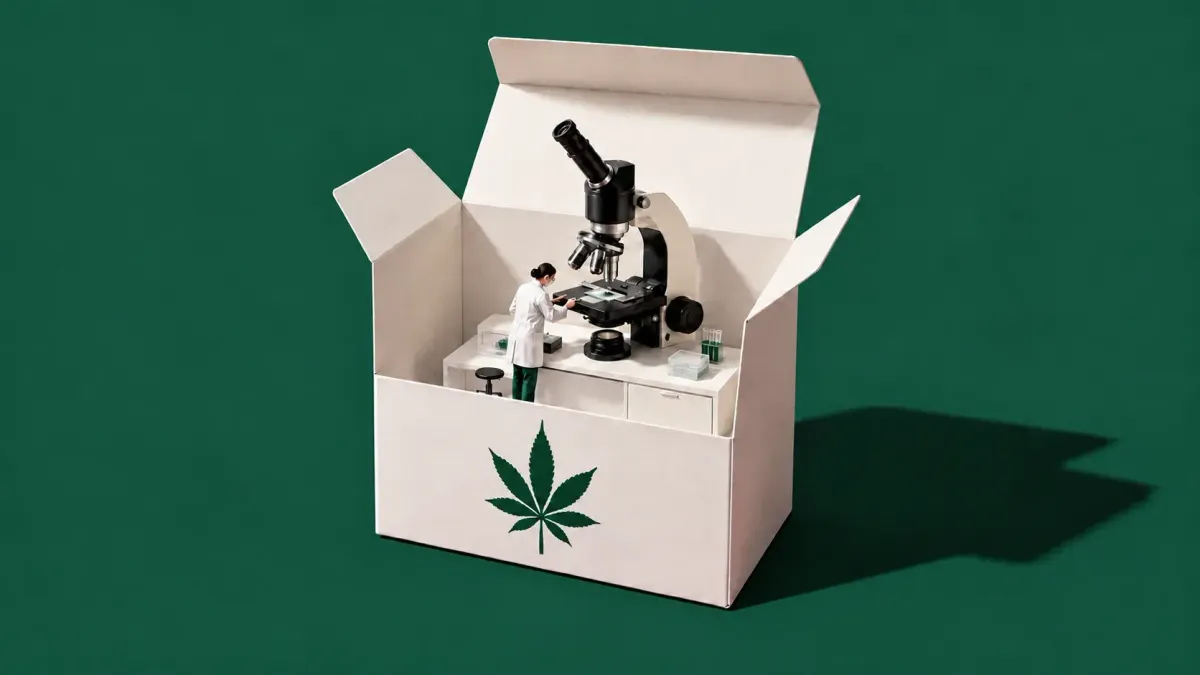
Missouri, Illinois and the Emerging Midwest Cannabis Research Commons
Somewhere in the Midwest, somebody with an aching knee is wondering whether a little THC and CBD might help.
Not whether the product will produce a spectacular Saturday afternoon. Not whether the packaging features a cartoon fruit riding a rocket ship.
Whether it will help the knee.
It's a wonderfully ordinary question for an industry that has spent the better part of a decade raising capital, navigating state constitutions, building dispensaries, perfecting extraction technologies and arguing about intoxicating beverages.
We know how to manufacture marijuana.
But how much do we really know about manufacturing marijuana that helps people?
And who's going to pay to find out?
From Market Formation to Medical Discovery
Illinois and Missouri offer two fascinating approaches to answering those questions.
Illinois has developed substantial public-health research infrastructure to evaluate cannabis legalization. Its newly released 190-page Cannabis Regulation and Tax Act evaluation, conducted by researchers at UIC's Jane Addams College of Social Work through the Cannabis Research Institute, represents an important contribution.
Among its findings, chronic pain accounts for nearly one-third of reported medical qualifying conditions. The report also examines changing purchasing patterns, consumption and public-health consequences.
That is valuable scientific scaffolding.
Across the Mississippi, Missouri is taking another step.
A new marijuana research-facility licensing framework is scheduled to take effect November 30, potentially enabling qualified organizations to cultivate, manufacture and study marijuana products under approved research protocols.
And critically, the opportunity isn't reserved exclusively for universities.
It creates room for qualified industry participants to contribute expertise, facilities, product development and commercial resources alongside academic researchers.
Industry-infused. Not industry-controlled.
That's a distinction worth building a regional research movement around.
What Does the Research Actually Tell Us?
Consider the emerging enthusiasm for THC/CBD combinations.
Consumers report that particular blends help with aching joints, chronic discomfort and other conditions.
Some of those experiences may point toward genuine therapeutic opportunities.
Others may reflect placebo effects, differences in products, individual physiology or misunderstandings about what the products contain.
Scientific evidence suggests certain THC-containing cannabinoid formulations can produce modest short-term improvements in some chronic-pain conditions, accompanied by adverse effects. Evidence for specific THC/CBD ratios remains incomplete.
That's not a reason to abandon the investigation.
It's a reason to organize it properly.
What formulations work? For whom? At what dose? Through which delivery mechanism? With what side effects?
Can manufacturers create standardized products that independent researchers can evaluate reliably?
And can those products eventually reach patients through appropriately regulated channels?
The answers will require more than enthusiastic testimonials or another round of impressive packaging.
A Little Equity Reality Check
Illinois Governor J.B. Pritzker deserves credit for helping establish one of the country's most ambitious cannabis legalization frameworks. I've followed his involvement in frontier industries for 27 years and admire his willingness to make consequential bets. But gubernatorial victory laps celebrating social equity deserve a footnote from the people actually operating these businesses. Grown In has documented years of licensing delays, financing obstacles, regulatory costs and the difficult economics confronting craft growers and social-equity entrepreneurs. Ownership diversity matters. So do profitability, survival and the ability to build generational wealth. A law's aspirations are not its outcomes. Fortunately, research can examine both.
The Missouri Opportunity
Missouri's cannabis regulators recently commissioned a market study estimating that approximately 93% of reported consumer cannabis expenditures flow through licensed channels.
That finding deserves serious attention.
It also raises interesting questions about methodology, pricing, consumer behavior and how a relatively young recreational market has organized itself.
Missouri's industry now operates at a potentially important intersection.
Medical marijuana.
Adult-use cannabis.
Intoxicating hemp-derived products.
Emerging research licenses.
Each represents a different regulatory and commercial framework for products derived from essentially the same plant.
The November 30 research rule offers a chance to connect these worlds more thoughtfully.
Licensed manufacturers understand formulations and production.
Universities understand experimental design and independent validation.
Regulators understand public safety and statutory responsibilities.
Patients understand the conditions for which they are seeking relief.
And investors understand the practical necessity of financing commercially viable enterprises.
None possesses the complete answer.
Together, they might develop something genuinely useful.
A Midwest Cannabis Research Commons
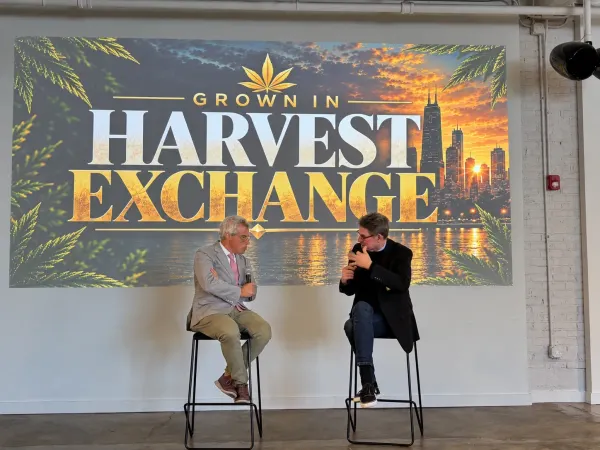
That's the opportunity Grown In and Project Middle Ground are beginning to explore.
A Middle Ground Midwest Cannabis Research Commons connecting government, industry, higher education, patients and independent researchers across state lines.
Not another trade association.
Not a government advisory committee designed to validate conclusions already reached.
Not an academic exercise disconnected from how real businesses operate.
A framework for identifying consequential research questions, assembling qualified participants, developing transparent funding arrangements and producing findings that can survive independent scrutiny.
Our earlier work with Chicago's 1871 Cannabis Innovation Lab demonstrated the potential of bringing cannabis entrepreneurs into a broader innovation ecosystem.
The next chapter can be more ambitious.
Imagine licensed Missouri manufacturers collaborating with qualified university investigators on standardized cannabinoid formulations.
Illinois public-health researchers contributing population-level findings and methodological expertise.
Clinicians and patients identifying practical therapeutic needs.
Regulators clarifying appropriate approval pathways.
Industry partners financing legitimate research without purchasing preferred results.
The scientific agenda should remain independent, and negative findings should be publishable.
That's how research becomes trustworthy.
And that's how innovation becomes an institution rather than a marketing slogan.
Two Lanes, One Plant
Federal cannabis policy is increasingly forcing a distinction between medical use and recreational intoxication.
The movement toward a more defined medical regulatory pathway, combined with tightening rules around intoxicating hemp products, suggests that the next cannabis economy may develop along increasingly distinct lanes.
But those lanes aren't fully constructed.
Federal recreational legalization remains unresolved, and individual states continue developing very different approaches to cannabis consumption, distribution and public safety.
This is where purposeful public-private collaboration becomes valuable.
Medical products demand rigorous evidence about effectiveness, safety, dosage and patient outcomes.
Recreational products require workable standards for potency, labeling, consumer education, impairment and responsible distribution.
Low-dose beverages deserve particular attention.
Missouri, after all, helped build one of the world's greatest beverage industries around products intended for social consumption.
The arrival of cannabinoid beverages raises intriguing questions about formulation, consumer behavior and how existing commercial infrastructure might adapt.
There is room for responsible liberalization.
There is also an obligation to establish evidence before declaring products safe or beneficial.
Meet Us in St. Louis
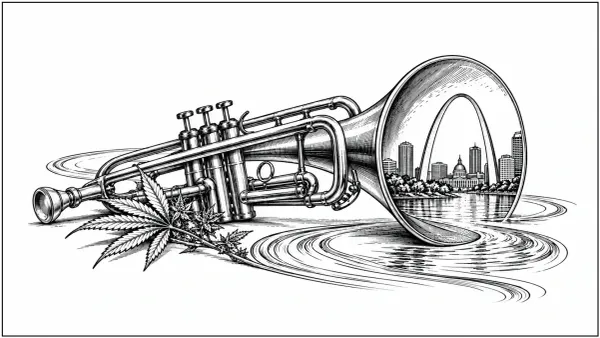
On November 12, Grown In and Cultivated will convene the next Midwest Cannabis Forum in St. Louis.
The timing is remarkable.
Missouri's hemp rules are changing. Its research-license framework takes effect later in November. Federal policy is shifting. Universities and licensed operators face new opportunities to engage.
And people with aching knees are still looking for trustworthy answers.
We intend to use this gathering to explore an interstate research agenda with people who understand both the promise and contradictions of this industry.
Our emerging Festivus framework encourages participants to air grievances, challenge assumptions and develop practical proposals across commercial and ideological divides.
Research can give those conversations something invaluable: evidence.
We don't need Illinois and Missouri to agree on every cannabis policy.
We don't need universities and manufacturers to share identical motivations.
We need them to recognize where their interests overlap—and develop credible ways to work together.
The next great cannabis breakthrough might not arrive in a dispensary.
It might emerge from a research partnership between people who previously had little reason to trust one another.
We know how to grow marijuana.
Now let's grow the knowledge to make it work better for the rest of us.