Congress. Cannabis. Connectivity. Creation.

I. The Desk Where the Boom Becomes Policy
There is a desk somewhere in Springfield that deserves its own oral history.
Call it J.B. Pritzker’s desk if you want. Call it the table where Illinois decided cannabis was not just a product category, but a test of state capacity. On that desk have landed, in no particular order: bud, billionaires, Bears stadium dreams, quantum ambitions, responsible artificial intelligence, pension math, social equity, tax revenue, and the unresolved question of whether the Midwest can build modern public systems without turning every civic project into a tribal fight.
Cannabis may be the most honest of those questions because it refuses to stay in one lane.
It is agriculture. It is retail. It is medicine. It is nightlife. It is social justice. It is banking. It is real estate. It is logistics. It is food and beverage. It is public health. It is municipal zoning. It is consumer packaged goods. It is culture. It is Willie Nelson, Buddy Guy, Bob Marley, Jim Belushi, moms at Target, bankers in private rooms, Illinois social equity operators, Michigan bulk buyers, and Indiana drivers doing quiet risk calculations at the state line.
And now, as Congress revisits the consequences of the 2018 Farm Bill, cannabis is also a national stress test for whether federal law can metabolize something states have already made normal.
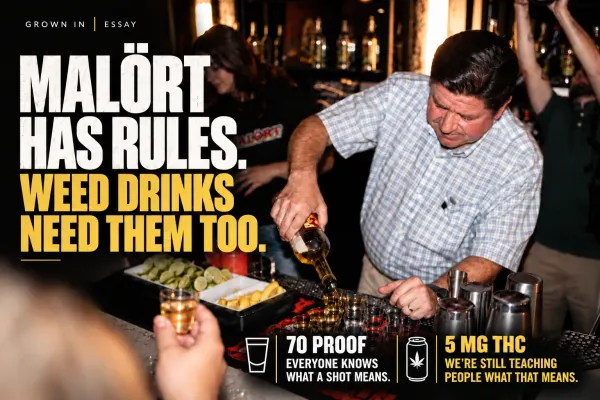
The immediate spark is intoxicating hemp. The 2018 Farm Bill opened a door for hemp-derived THC products, and the market sprinted through it. Gummies, seltzers, sessionable 5 mg beverages, 10 mg cans, liquor-store coolers, restaurants, arenas, big-box retail. Not marijuana, technically. Not dispensary cannabis, legally. But THC all the same.
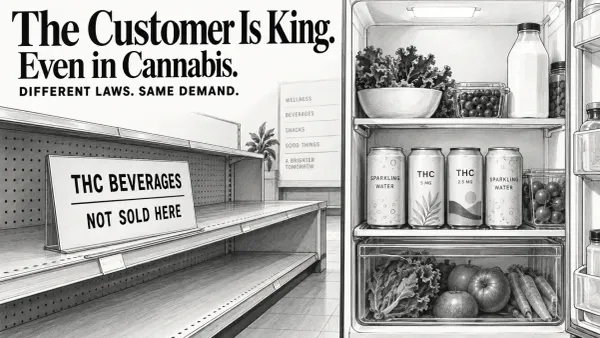
That is why not every Chicago Target is selling intoxicating hemp beverages just yet — and why the question matters. What is the wait? Local permission. Corporate caution. Regulatory fog. Category risk. Maybe all of the above. But the bigger story is that Target’s cautious rollout into Illinois, Florida and Texas is not a novelty item. It is mainstream retail asking whether cannabis can behave like a beverage aisle before Congress decides whether the beverage aisle should exist.
Green Thumb Industries is headquartered here and plays both sides of the emerging divide: state-licensed cannabis and hemp-derived beverage channels. Illinois operators invested in highly regulated dispensary systems, taxes, compliance, security, real estate and public scrutiny. Hemp beverage brands, meanwhile, are showing how quickly cannabis can enter ordinary consumer life when the format is familiar, the dose is modest, and the purchase does not require a dispensary visit.
The result is not a clean fight between “real cannabis” and “loophole cannabis.” It is a collision between two systems of legitimacy.
State-licensed operators have earned the right to be frustrated. They built in public. They paid the freight. They absorbed the boom-and-bust cycle, 280E, capital-market whiplash, oversupply, municipal bottlenecks, and the reputational burden of going first.
But hemp beverages have also revealed something important: many consumers were not waiting for the dispensary experience to become normal. They were waiting for cannabis to fit into the rituals they already understood — a can at a concert, a cooler at a party, a low-dose drink instead of a second beer, a social format that does not require becoming a cannabis person.
That is not a loophole. That is a signal.
This is where Chicago becomes more than a market. It becomes a lens. To that end, we are pleased to announce the Cannabis Congress, a policy conversation shaping the industry’s next phase. As part of the Grown In Harvest Exchange at Sarabande Chicago on October 8, the Chicago Cannabis Congress will convene leaders from the private, government, education, medical, and cultural sectors to help shape a framework for global cannabis normalization, commercialization, and standardization.
II. Gallery: What the Room Proved at Salvage One
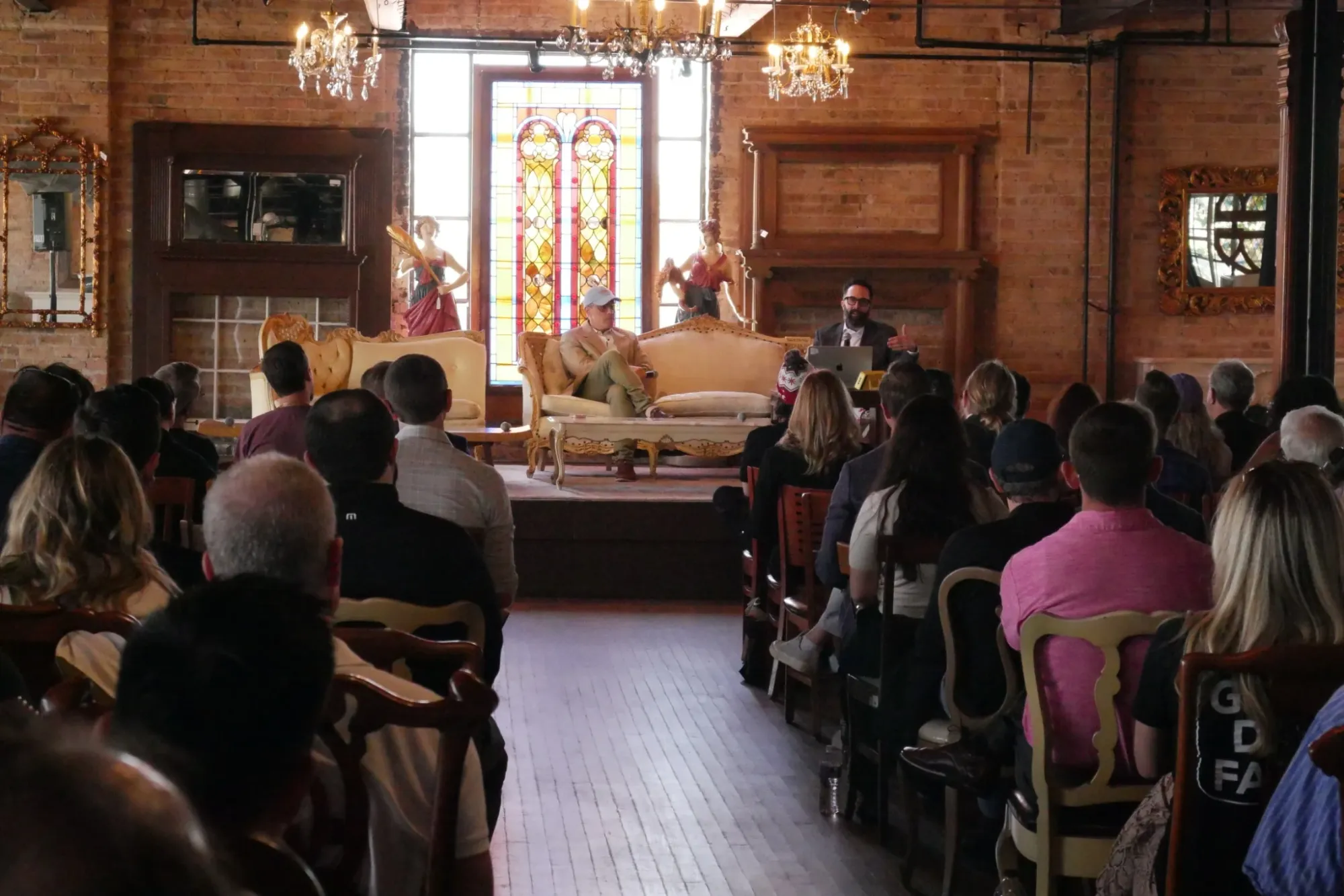
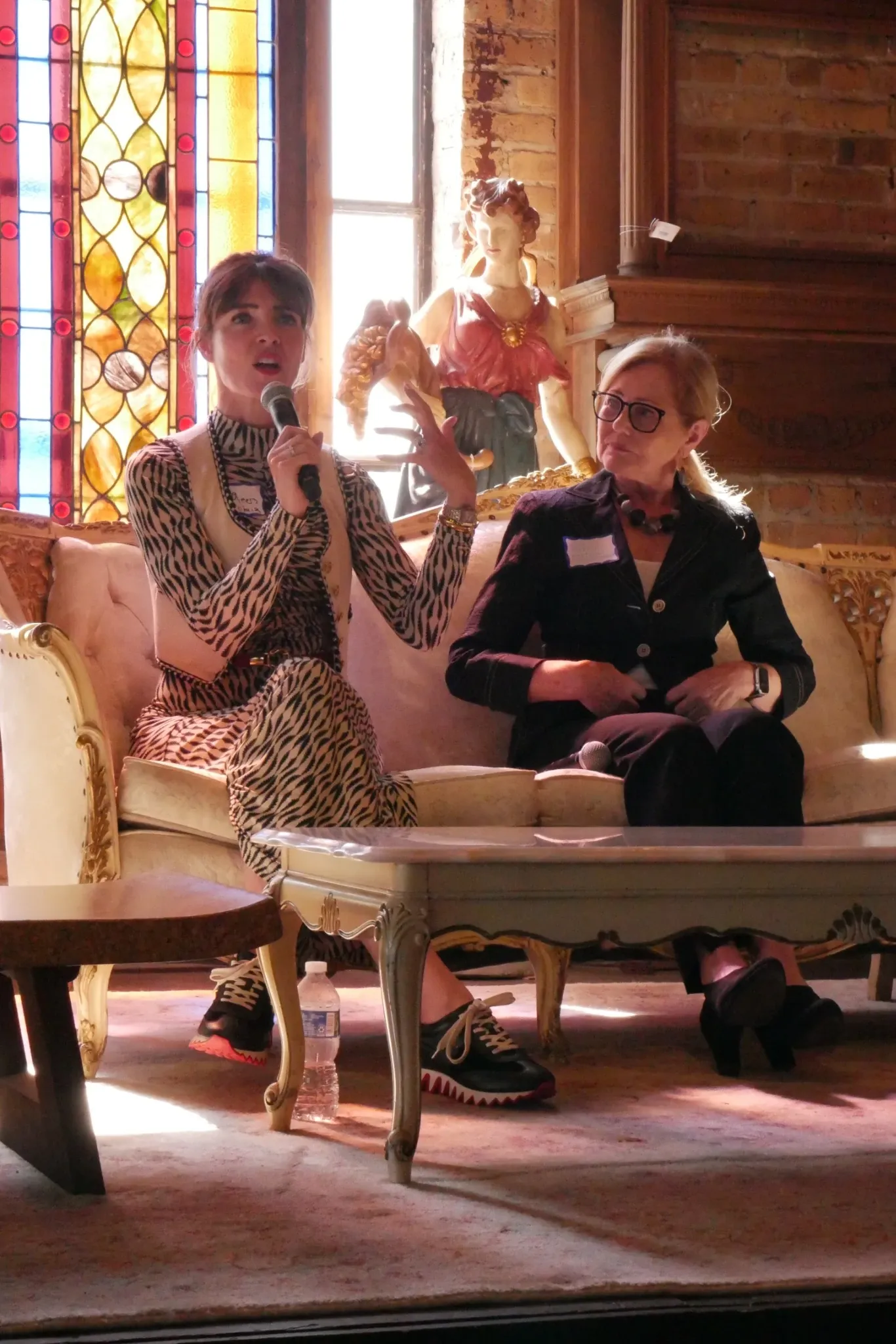
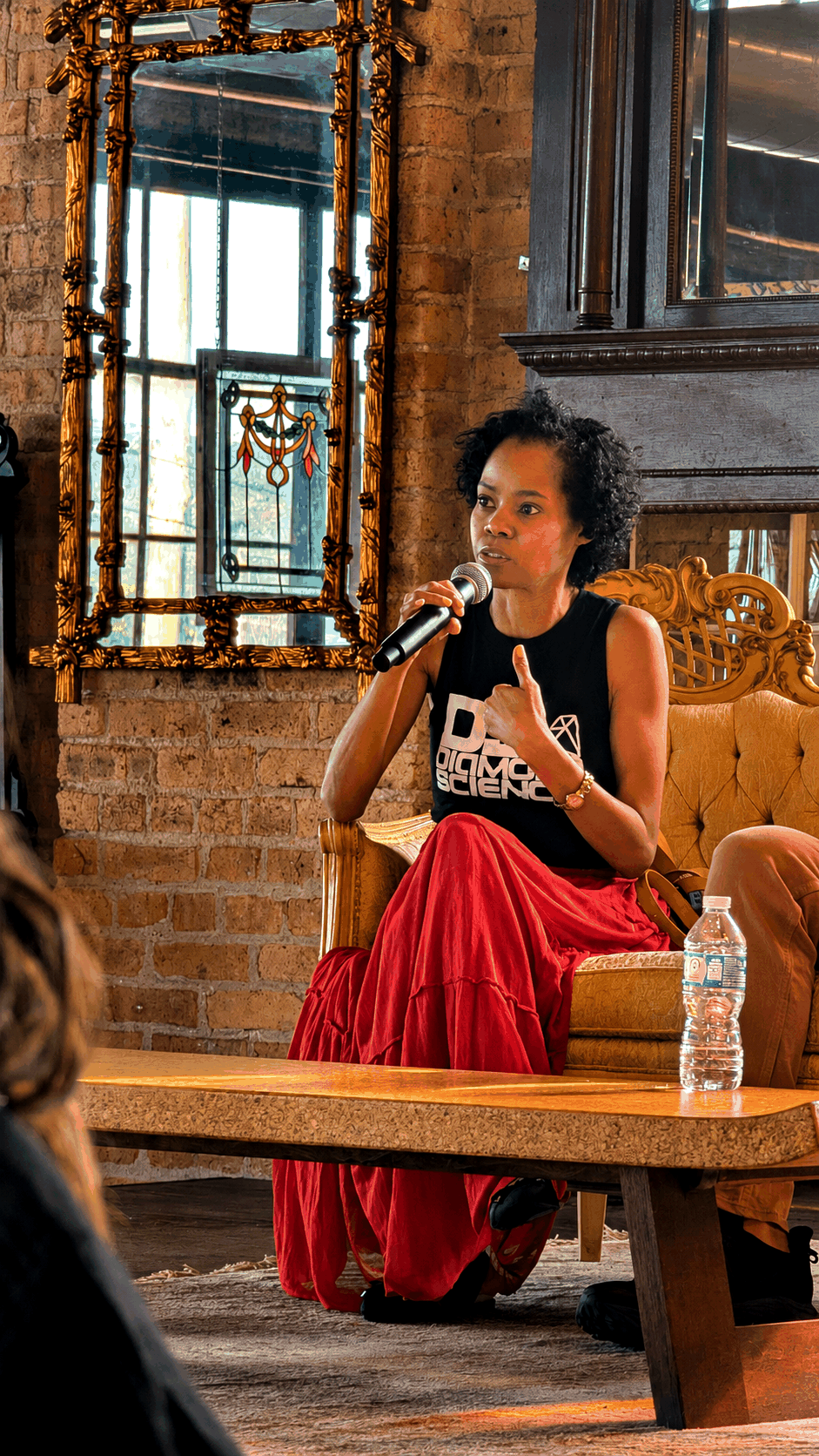
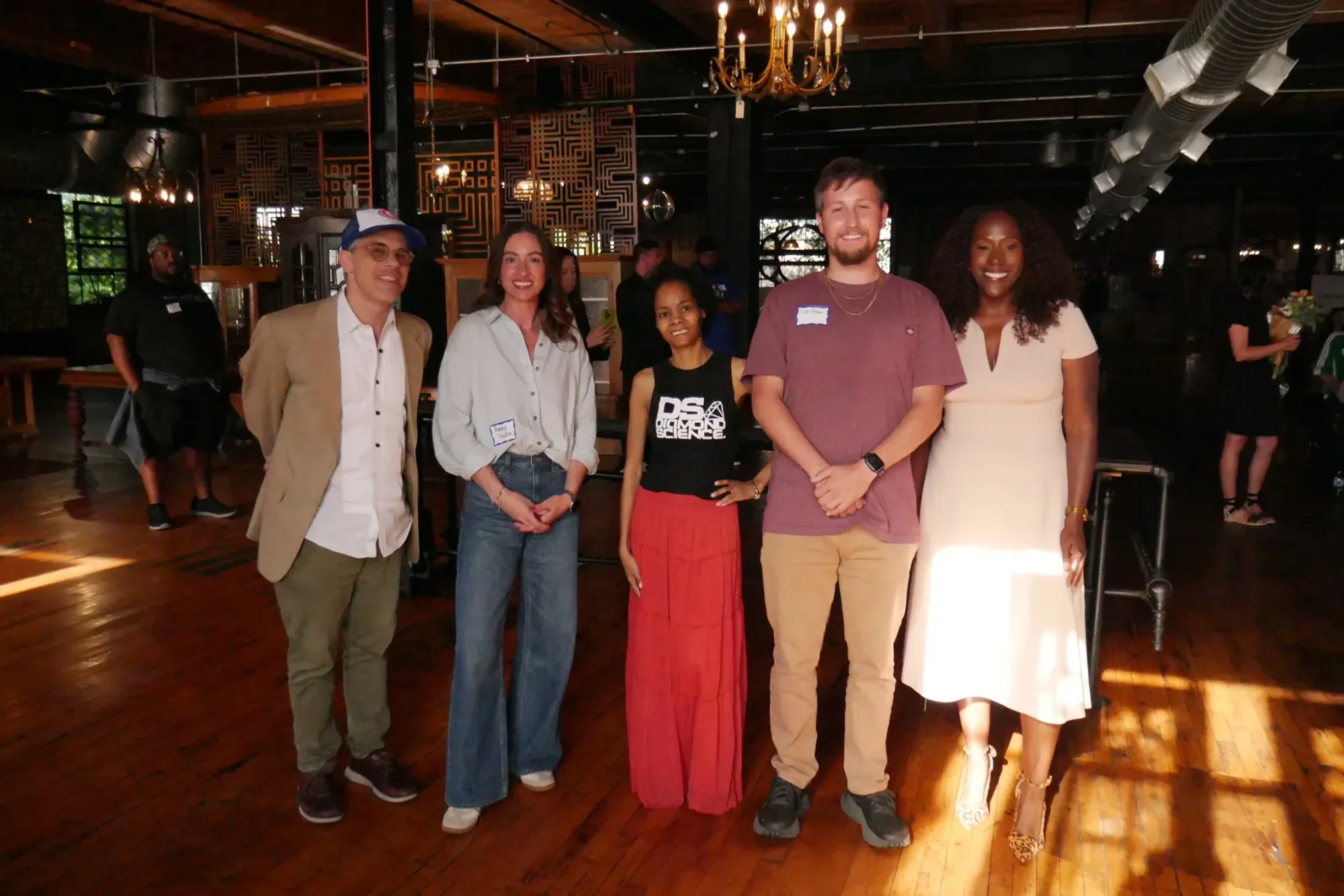
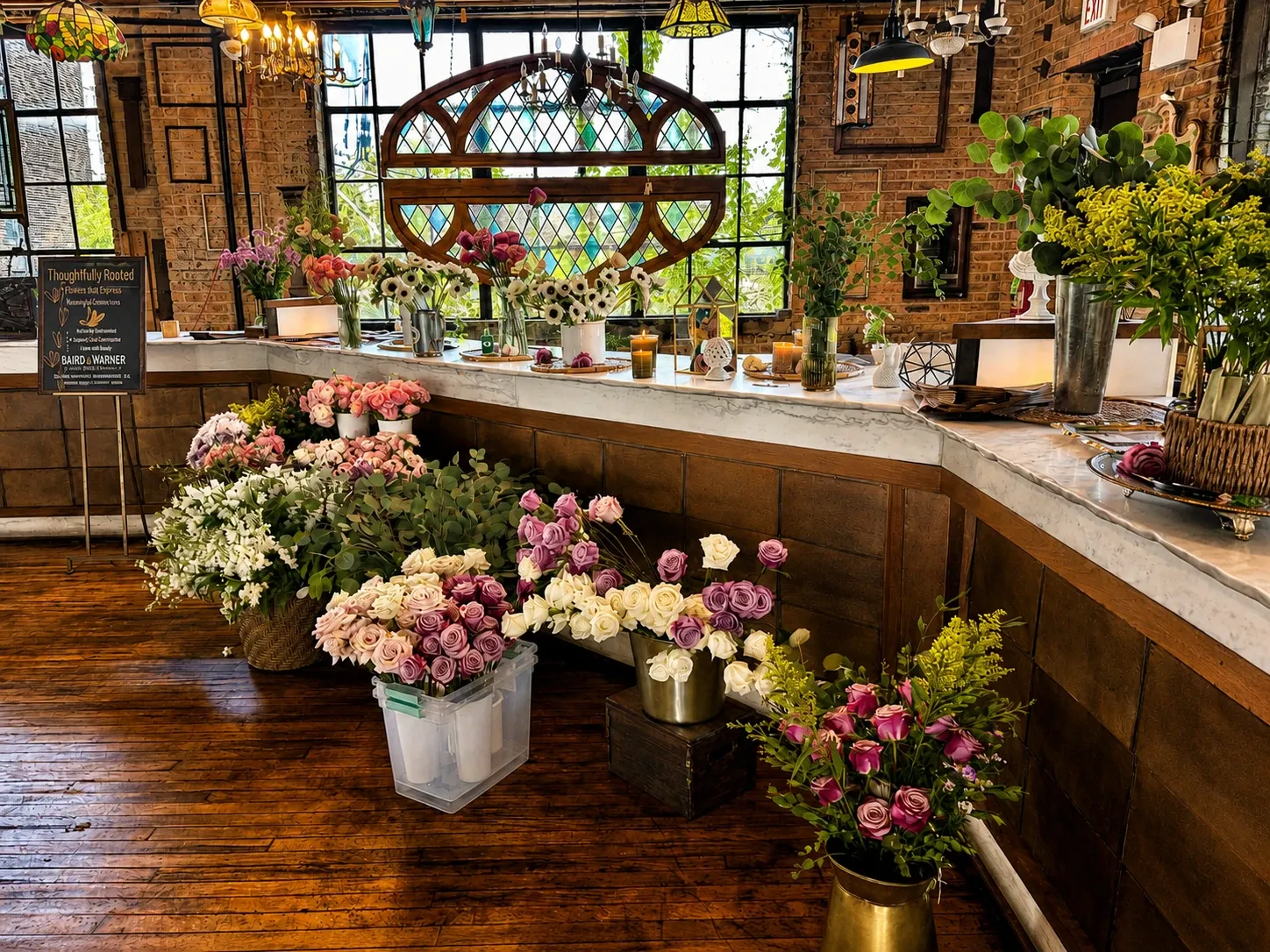
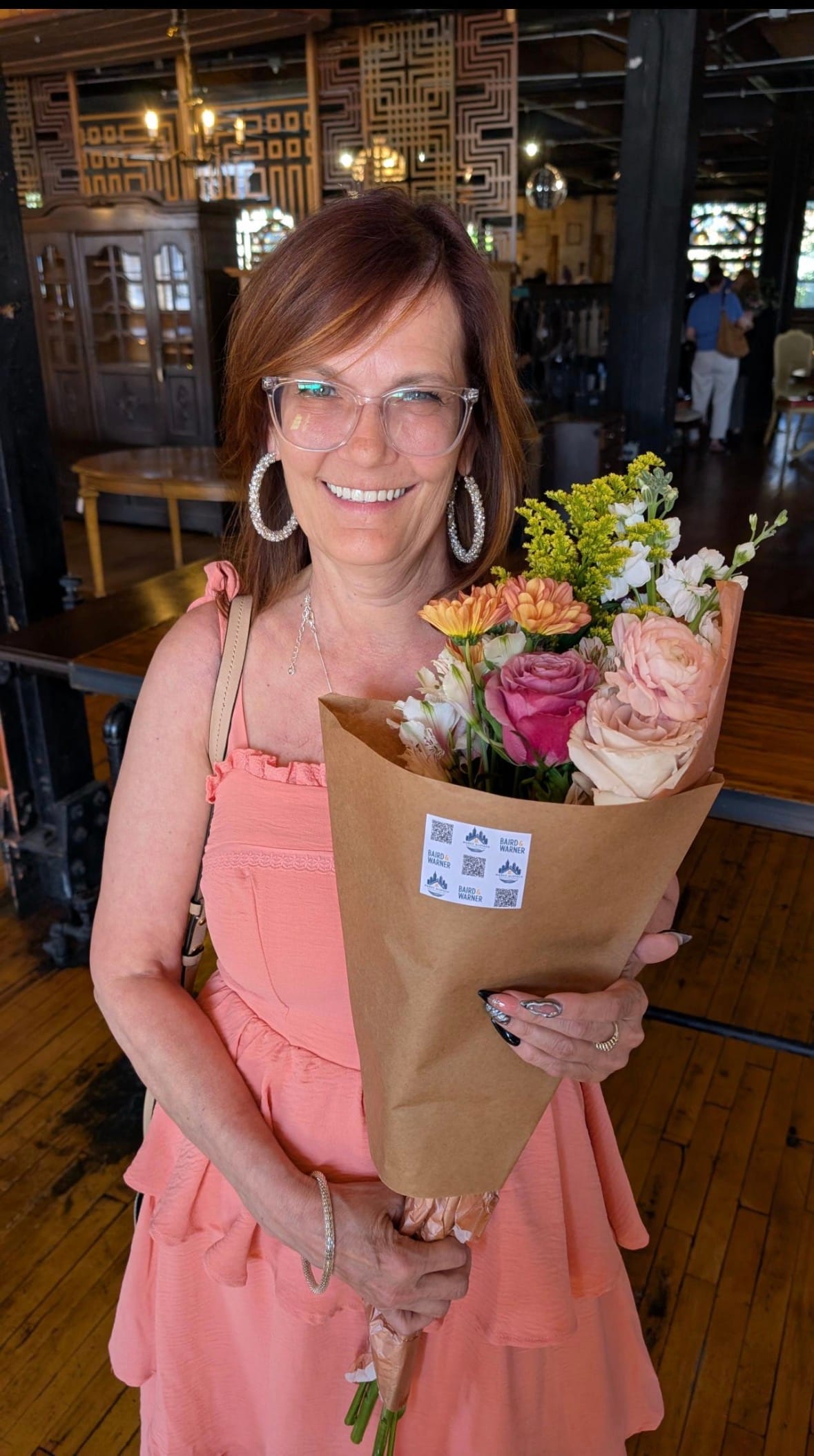
The Room Is the Product
The images from Salvage One do not need individual captions because, together, they tell one story: the Midwest cannabis industry is no longer just a collection of licenses, products, policies, operators, investors, lawyers, researchers, bankers, beverage builders, and advocates moving in separate lanes. It is becoming a room.
A real room. An old Chicago industrial room. A working room. A room where arrival, conversation, hospitality, capital, policy, compliance, research, flowers, introductions, and follow-up all became part of the same civic-commercial infrastructure.
That was the real lesson of May 28 at Salvage One. Whether we called it a forum, a summit, a playbill, a field guide, or an excuse to get the right people inside an old Chicago building, the room made one thing plain: cannabis has outgrown the old categories.
The Midwest Cannabis Forum was not just about Illinois. It was about the middle of the country learning to speak with more confidence. Minnesota has helped normalize low-dose beverages. Michigan has shown what price compression and consumer access look like when abundance wins. Missouri has built momentum. Ohio is entering the adult-use era. Kentucky is central to hemp politics. Indiana remains the reminder that prohibition does not disappear just because the map around it turns green. Iowa, Wisconsin, and the Great Lakes corridor sit inside the same commercial weather system whether their laws admit it or not.
The next market will not be built only on stages. It will be built in smaller rooms too: banking conversations, operator introductions, beverage questions, compliance realities, capital needs, hospitality moments, and the practical work of trust. Normalization is not only law. It is taste, sunlight, music, flowers, shared language, and the feeling that an industry can enter polite society without losing its soul.
A forum becomes a summit when the room leaves with a shared map. A summit becomes a congress when the map turns into standards, follow-up, and collective memory.
This is why the next move should be a congress.
Chicago, October 2026. Avondale doobie district. Half-day Burn ’Em Plan 4.20 sessions on Chicago’s expanding role in global cannabis. Half-day public town hall. Après networking. A surprise or two. Serious enough for capital, kind enough for community, strange enough to be true.
Not another trade show. Not another panel blur. Not another “future of cannabis” conversation where everyone agrees the future is complicated and then goes home.
A congress.
A collaborative congress of cannabis stakeholders — commercial, cultural, civic, creative, compassionate, global — convened from a Midwest perspective to rationalize the tensions everyone can feel but no one system can solve alone.
III. Many Rivers to Cross
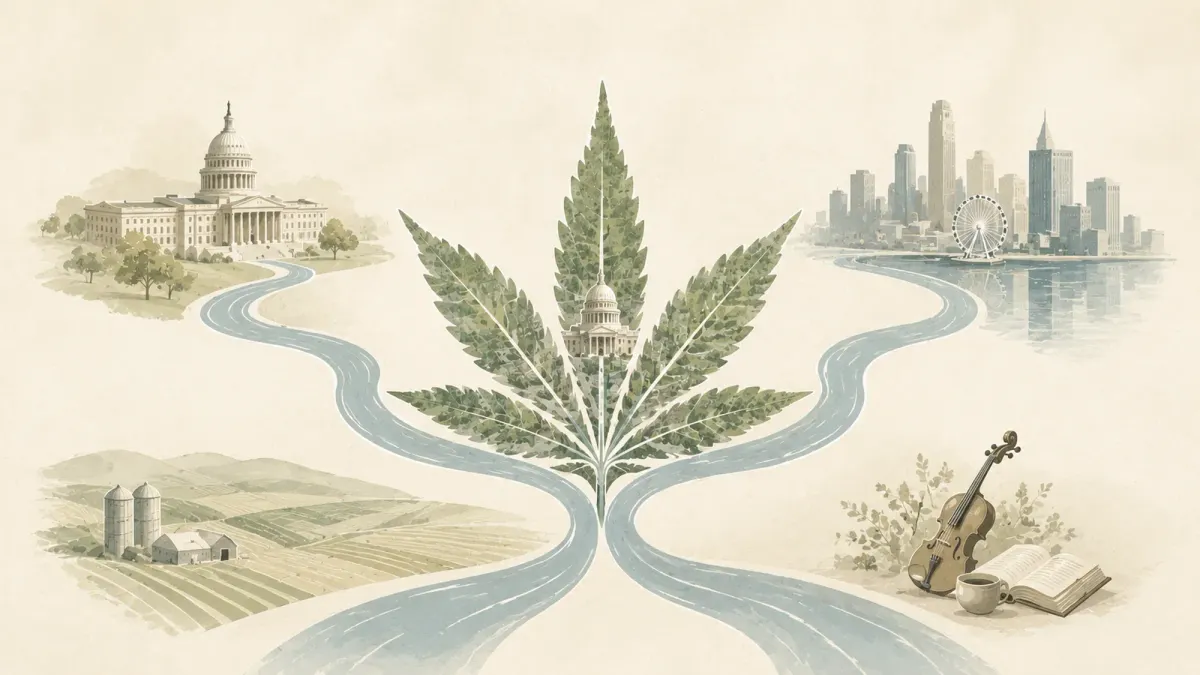
The river metaphor matters because cannabis normalization has never crossed at one bridge.
One river runs through Congress, where Rand Paul, Amy Klobuchar, Jeff Merkley and others now represent the odd new cannabis coalition: farmers, hemp entrepreneurs, state-regulated operators, libertarians, progressives, public-health advocates, anti-prohibitionists, cautious regulators and investors looking for the next defensible channel.
Another river runs through Illinois politics, where Juliana Stratton’s rise deserves more cannabis attention than it has received. Before she became the Democratic nominee for Dick Durbin’s U.S. Senate seat, before the Pritzker endorsement became national tea-leaf reading, before the question of “Pritzker 2028” became a parlor game with better catering, Stratton was part of the Illinois governing team that helped turn cannabis legalization into a national case study. Illinois did not merely legalize. It attempted to attach legalization to expungement, equity, licensing, taxation and public narrative. Imperfectly, yes. Painfully, yes. But with ambition.
That experience now matters in Washington.
Where does Stratton stand relative to Rand Paul’s hemp coalition, Kirsten Gillibrand’s cannabis reform posture, McConnell’s hemp-closing instinct, and the operators who want fairness between federally gray beverage channels and state-licensed cannabis systems? That is not a niche question. It is one of the most useful questions Illinois can export.
A third river runs east to west across the Midwest, where cannabis remains cheaper and more carefree in Michigan until the moment the driver remembers Indiana exists. There is a joke in there about the Indiana tax, but it is not actually funny. The Midwest consumer already lives in a regional cannabis market. Law enforcement and state statutes are the ones pretending each border is a moral wall.
A fourth river runs through culture.
Buddy Guy’s guitar does not need cannabis to be transcendent, but blues, reefer, improvisation, pain relief, joy, nightlife, migration, policing and American music have always known each other. Jim Belushi’s cannabis story, too, could use a straighter narrative because underneath the comedy is a genuinely powerful claim: cannabis can be life-saving, grief-softening, veteran-helping, opioid-reducing, farm-saving, family-changing medicine. He is not just on a celebrity weed tour. At his best, he is on a Mission from Ganja God, carrying a crossover story that cannabis still needs: funny enough to enter the mainstream, serious enough to matter once it gets there.
And then there is Chicago.
Chicago knows how to host collisions. Railroads, futures markets, food systems, music scenes, political machines, world’s fairs, blues clubs, universities, neighborhoods, warehouses, lakefront dreams, civic grudges, tavern wisdom. Cannabis belongs in that lineage not because it is cute, but because it is becoming infrastructure.
The next congress should ask better questions.
How should intoxicating hemp beverages be regulated without erasing small businesses or undercutting licensed operators who built the legal market? What can Illinois teach federal policymakers about equity, expungement, taxation and implementation? What can Michigan teach about price, access and the consequences of abundance? What can Minnesota teach about low-dose beverages and mainstream social use? What can Kentucky teach about hemp farmers and congressional leverage? What can Chicago teach about venue infrastructure, banking, research, logistics, real estate, hospitality, music, and trust?
Most of all: who gets to define normal?
Because cannabis is no longer asking permission to exist. It exists. It is in dispensaries, drinks, arenas, portfolios, lawsuits, farms, kitchens, festivals, research labs, senate campaigns, family conversations, recovery stories, and weekend coolers. The question is whether normalization will be kind, coherent, data-driven and fair — or whether it will be written in fragments by whichever faction gets to Congress first.
That is why October matters.
Congress. Cannabis. Connectivity. Creation.
Chicago should host the room before someone else writes the rules for it.
Inquire within.