Cannabis Needs a Different Frontier Story

The female plant produces the flower. Women are reshaping the consumer market. The smartest move for cannabis may be to stop borrowing old tech mythology and start trusting the leadership rhythm this industry actually requires.
The cannabis industry has a metaphor sitting in plain sight.
Cultivators prize the female plant because it produces the flower—the buds rich in cannabinoids that determine quality, effect, and value. The point of the plant, commercially speaking, is female. That is biology, not branding.
It also happens to be a useful business parable.
Because cannabis, unlike the old internet dream, is not simply a scale story. It is a cultivation story, a retail story, a regulation story, a chemistry story, a behavior story, a stigma story, and, increasingly, a women’s market story. And that matters because frontier industries tend to reveal their character early. They tell you, often before they fully admit it, whether they plan to learn from the world as it is or simply replay the power habits of the last boom.
For too long, cannabis has looked tempted to borrow the oldest script in American business: male capital, male swagger, male mythology, male certainty, and the familiar assumption that the people building the market will naturally look like the people who controlled the last one.
That script failed tech more than tech likes to admit.
The old venture-and-startup economy sold us a frontier religion built around speed, disruption, and the founder as conquering hero. But women were routinely under-backed, under-sponsored, or asked to operate in systems that treated access as a favor rather than infrastructure. Ellen Pao’s case against Kleiner Perkins became one of the clearest public symbols of that imbalance, regardless of the verdict. The broader issue never went away. Reuters reported in 2025 that women entrepreneurs still face major barriers to digital safety and growth online, with 57% of women entrepreneurs in a global survey reporting online harassment and 41% intentionally limiting their visibility as a result. Forbes argued this month that the new AI-era “broken rung” is often not about women lacking ambition, but about organizations failing to hand them early access, encouragement, and permission to participate.
Cannabis has a chance not to make the same mistake.
That chance is showing up first in the customer base. The National Institute on Drug Abuse said that for the first time in 2023, women ages 19 to 30 reported higher past-year cannabis use than men of the same age. Reuters reported in 2024 that this generational shift is already pushing cannabis companies to rethink products and strategy, especially around categories women tend to favor, including edibles, tinctures, topicals, and beverages.
That is not social engineering. That is demand.
And it points to something the industry still struggles to say out loud: cannabis may be one of the rare frontier sectors where women should not merely be welcomed as consumers or highlighted as founders on panels, but trusted as central shapers of the category itself.
Why? Because this industry rewards a kind of intelligence that old tech culture routinely undervalued.
Cannabis is not just code and scale. It is dosage, trust, compliance, household decision-making, body literacy, social ritual, wellness, retail interpretation, and the ability to translate a complicated product into everyday life. It sits at the crossroads of agriculture, medicine-adjacent behavior, hospitality, regulation, consumer packaged goods, and public education. In a sector like that, collaborative understanding is not soft. It is operational. Listening is not ornamental. It is market strategy.
That is where the old internet analogy breaks down.
Twenty-five or thirty years ago, tech promised frictionless progress. Build the platform. Capture the users. Scale the thing. Fix the rest later. Cannabis does not work that way. Or at least it should not. It is too regulated, too embodied, too local, too culturally loaded, and too dependent on trust. The winners here are not simply the people who can tell the loudest future story. They are the ones who can build a market people actually want to live inside.
Women are already helping write that market. Reuters’ reporting on the “grass ceiling” shift noted that young women are not only consuming cannabis at rising rates but are influencing the mix of formats and experiences the industry is investing in. That has real implications for product development, store design, talent, branding, and leadership. A sector increasingly shaped by discreet, low-dose, wellness-oriented, and lifestyle-compatible products should probably look beyond the old male grammar of domination, conquest, and hype.
This is not an argument for halo effects. Women do not need to be romanticized into moral saviors. Cannabis is still a business, and business tends to test everyone’s ideals. But it is an argument for pattern recognition.
If the female plant is central to the product, if women are increasingly central to the consumer market, and if the category itself demands high-trust, cross-functional, emotionally intelligent leadership, then the smart business move is not to keep treating women as a secondary constituency in a male-led frontier story.
The smart move is to let women lead more of the narrative.
That means more than hiring optics. It means funding patterns. Promotion patterns. Product authority. Retail authority. Boardroom voice. Brand definition. It means noticing whether the people closest to the customer are also the people trusted to shape the future of the company. It means building a cannabis industry that does not merely repeat the internet’s imbalance with better packaging and a wellness vocabulary.
Grown In, at its best, has always suggested a different possibility: that cannabis can mature as a sector by widening the room, not narrowing it. That this can be a frontier industry without becoming a caricature of the last frontier industry.
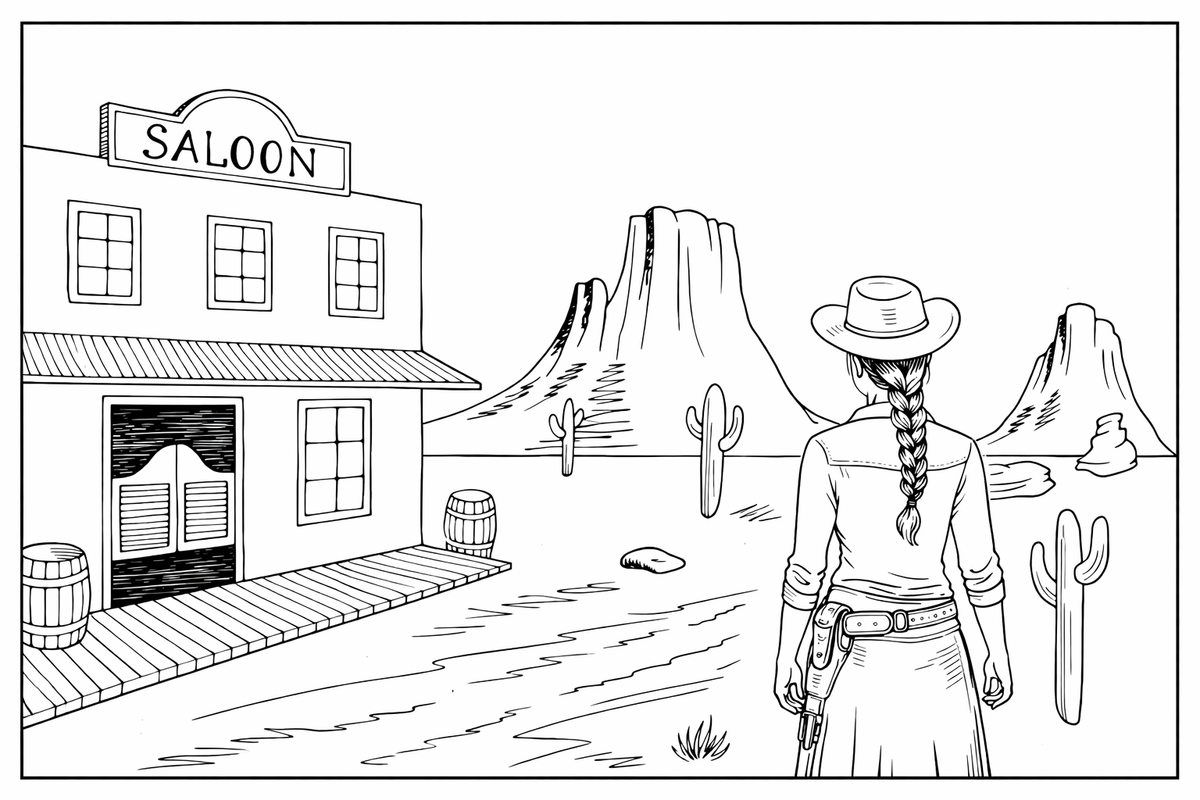
The old frontier story was about who could seize the map first.
This one may be about who can actually tend the garden.
And on that question, the market may already be telling us something the industry is only beginning to hear.