One Molecule, Two Markets: Federal Drift, Global Opportunity, and the Cannabis Middle Ground
Cannabis, hemp, regulation, and global opportunity are colliding in a fragmented market still searching for equilibrium.

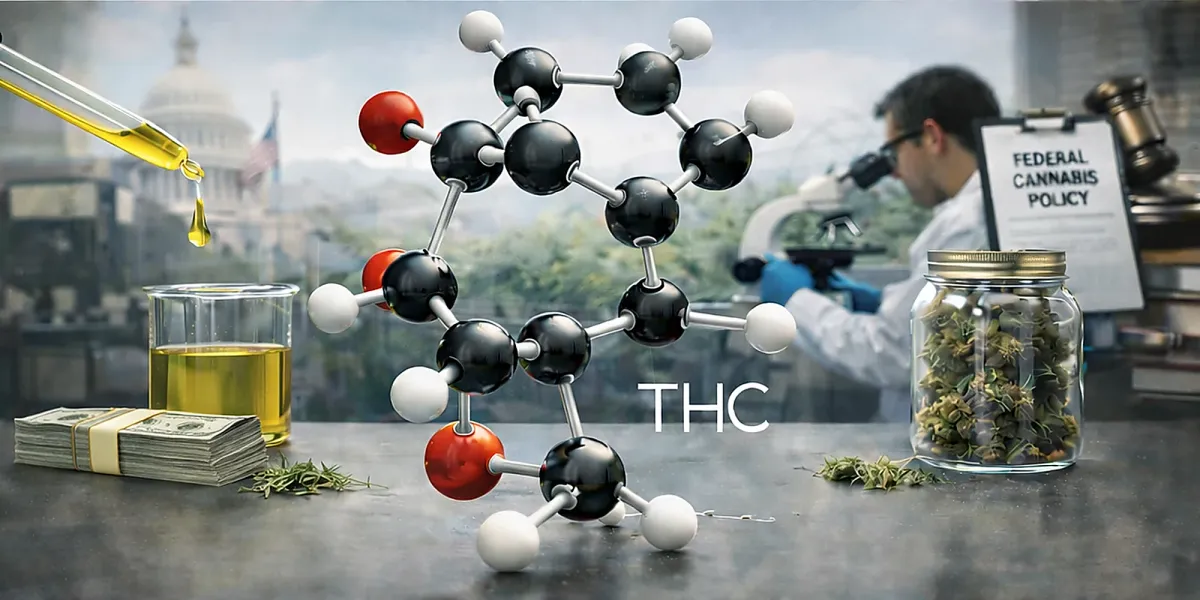
At the federal level, cannabis policy in the United States is not moving in one direction. It is moving in two — simultaneously, unevenly, and sometimes at cross purposes.
On one track sits the state-regulated cannabis industry: licensed operators who endured early chaos, built compliance infrastructures from scratch, raised capital under punitive conditions, and now seek relief from the tax and banking constraints that continue to define their economics. On the other track is the federally legal hemp market created by the 2018 Farm Bill — an unintended parallel system that has produced intoxicating products, particularly beverages, outside the traditional dispensary framework.
Both claim legitimacy. Both are growing. Both are lobbying intensely.
And both revolve around the same molecule.
For state-licensed cannabis companies, the immediate priorities are familiar. Chief among them is relief from Internal Revenue Code Section 280E, which prevents businesses trafficking in Schedule I substances from deducting ordinary expenses. Combined with limited access to banking and capital markets, this tax burden has forced even large operators to operate with thin margins despite robust consumer demand. Rescheduling cannabis from Schedule I to Schedule III would not fully normalize the industry, but it would remove 280E and signal a degree of federal acknowledgment that the status quo is untenable.
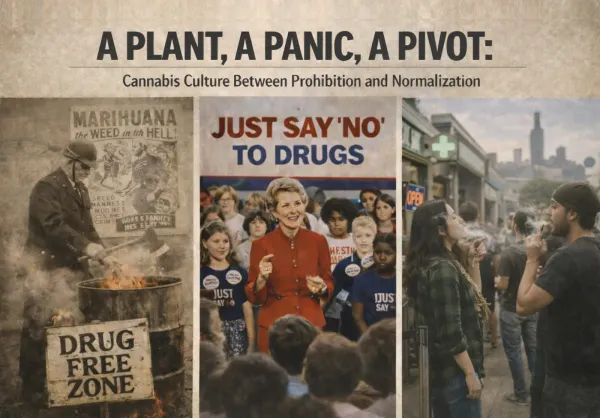
Notably, momentum toward rescheduling is now being driven by a Republican administration — a sign that cannabis policy has shifted from ideological battleground to pragmatic political calculation. The conversation in Washington increasingly centers on how to integrate the industry into the existing regulatory state, not whether it should exist at all.
SAFE Banking legislation, long viewed as the next logical step, appears less likely in the near term. Allowing federally chartered banks to serve cannabis businesses would unlock institutional capital, attract large investment firms constrained by “sin” policies, and dramatically alter competitive dynamics. But congressional bandwidth is limited, and other priorities continue to crowd the legislative calendar. For now, incremental executive action seems more plausible than sweeping statutory reform.
Meanwhile, the hemp sector faces its own moment of reckoning.
The 2018 Farm Bill legalized hemp containing less than 0.3 percent delta-9 THC, but it did not anticipate the rapid development of chemically converted cannabinoids that can produce intoxicating effects while technically remaining compliant. The result has been an explosion of products — especially beverages — sold through mainstream retail channels, often with minimal oversight. These products are federally legal, widely distributed, and increasingly popular among consumers seeking alternatives to alcohol.
Industry observers expect Congress to address this loophole before the Farm Bill’s next renewal deadline. Most scenarios include tighter controls on intoxicating hemp derivatives, but many anticipate a carve-out for beverages, which have attracted significant investment from major alcohol companies and consumer brands. The fate of CBD flower and edible products is far less certain.
From the perspective of licensed cannabis operators, the situation feels asymmetrical. They operate under strict state regulations governing testing, labeling, packaging, distribution, and taxation, while hemp-derived competitors often face fewer constraints. Calls for an “even playing field” are therefore as much about regulatory parity as about market share.
From the perspective of the hemp industry, the current system represents innovation meeting consumer demand in the absence of clear federal guidance.
Both arguments have merit. Neither resolves the underlying tension.
The stakes extend beyond domestic policy. Cannabis is increasingly a global industry, and international dynamics complicate the picture further. Canadian companies entered the market early, benefiting from federal legalization and access to public capital, but many have struggled to achieve sustainable profitability. U.S. multi-state operators, operating under more restrictive conditions, have built substantial footprints but remain cut off from major exchanges and traditional financing channels. Cross-border relationships — financial, commercial, and diplomatic — remain constrained by divergent legal frameworks.
Paradoxically, cannabis could become an area of cooperation between the United States and Canada, providing a template for harmonizing standards in a sector where both countries have deep experience. Similar opportunities exist with other emerging markets. Israel continues to lead in medical research despite regional instability. European countries are cautiously expanding access, with Greece positioning itself as a potential cultivation hub due to climate and infrastructure advantages. U.S. operators are already exploring international distribution pathways in anticipation of future regulatory alignment.
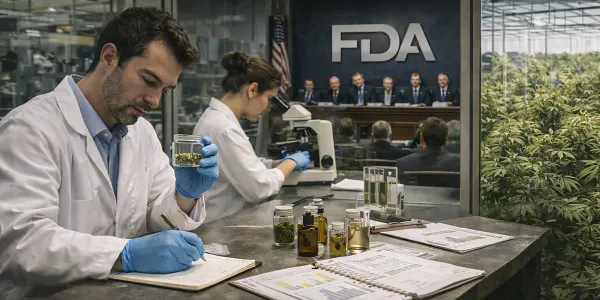
Large pharmaceutical companies are watching closely. A globally standardized framework for cannabinoid research, production, and distribution could unlock enormous markets, particularly if regulatory agencies like the FDA establish clear pathways for approval and oversight. For now, uncertainty remains the dominant condition.
Even basic questions about consumer products are unsettled. Will high-potency cannabis remain confined to licensed dispensaries while lower-dose beverages and “sessionable” products move into mainstream retail? How will intoxication be defined and measured across product categories? How will public health concerns be balanced against commercial opportunity? And how will regulators address the persistent illicit market that continues to undercut legal channels?
Technology adds another layer of complexity. Artificial intelligence promises advances in cultivation optimization, product development, logistics, and personalized consumer experiences, yet regulatory frameworks for data use, marketing, and distribution remain fragmented. Digital advertising restrictions imposed by major platforms further limit how companies communicate with potential customers.
In this sense, cannabis is not just a product category but a stress test for modern governance. It sits at the intersection of agriculture, medicine, consumer goods, finance, law enforcement, and international trade. Decisions made in one domain ripple across the others.
Chicago, interestingly, occupies a literal and metaphorical middle in this landscape. The city hosts major operators, financial institutions, research universities, logistics networks, and marketing expertise. It is also home to communities with strong international ties, including entrepreneurs connected to emerging cultivation regions abroad. Like the broader Greek example — a diaspora bridging markets and cultures — Chicago’s cannabis ecosystem reflects a blend of local knowledge and global perspective.
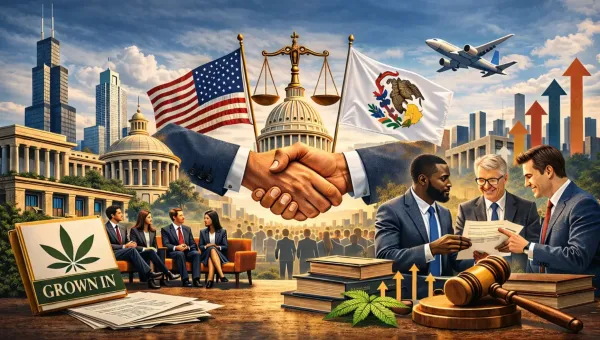
If there is a path forward, it will likely emerge not from ideological victory but from negotiated alignment. The industry’s future depends on reconciling competing incentives across federal agencies, state governments, private capital, public health advocates, and consumers themselves.
The plant may be ancient, but the policy architecture surrounding it is still under construction.
Somewhere between prohibition and laissez-faire lies a workable equilibrium — a middle ground where safety, innovation, and economic opportunity can coexist. Finding that equilibrium will require less rhetoric and more institutional craftsmanship.
Fortunately, that is precisely the kind of problem Chicago has been solving for more than a century.