Measuring the Unknown: Why Cannabis Needs a Research and Education Infrastructure — Not Just a Market
A multibillion-dollar cannabis industry now exists without the coherent research and education framework a mature sector requires.

Across the world, cannabis innovation is happening in pockets.
Israel continues to lead in medical research. European countries are cautiously building regulatory frameworks. Universities in North America are studying everything from agricultural optimization to therapeutic potential. Private companies are generating enormous volumes of real-world data through cultivation, retail transactions, and patient outcomes.
Yet these efforts remain fragmented, underfunded, and disconnected.
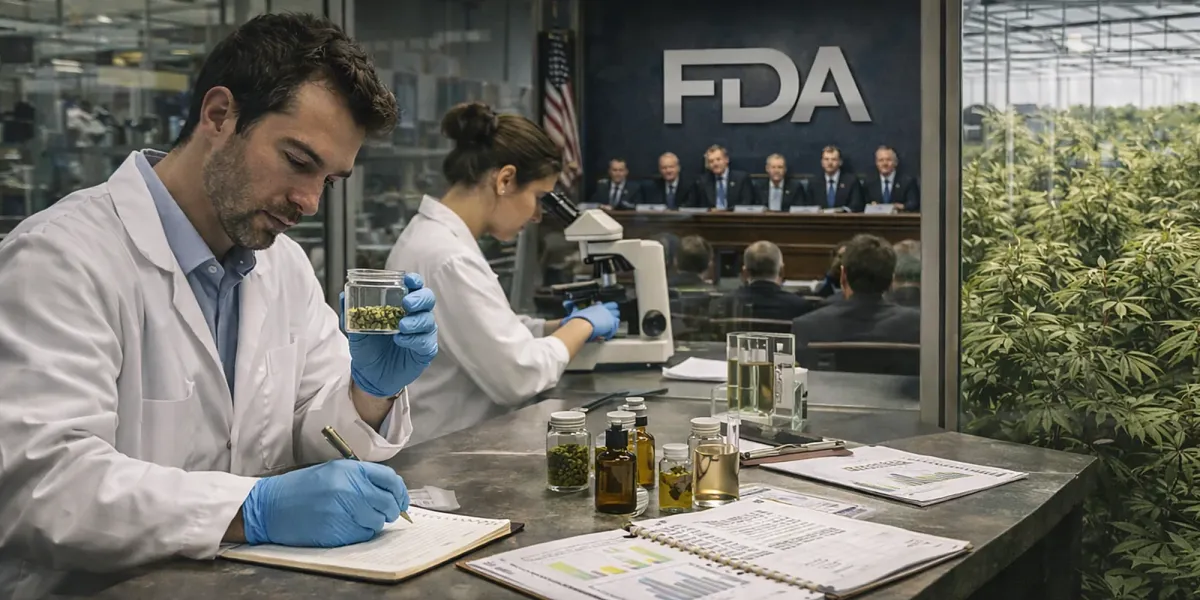
The core problem is simple: we cannot know what we cannot measure — and cannabis remains one of the least systematically measured widely consumed substances on earth. Despite legalization in dozens of jurisdictions, there is still no coordinated infrastructure linking health research, agricultural science, consumer behavior, and product development. In the United States, federal agencies — particularly the FDA — devote relatively little sustained attention to the plant, leaving states, universities, and private actors to fill the void.
The result is a knowledge ecosystem that resembles a patchwork rather than a system.
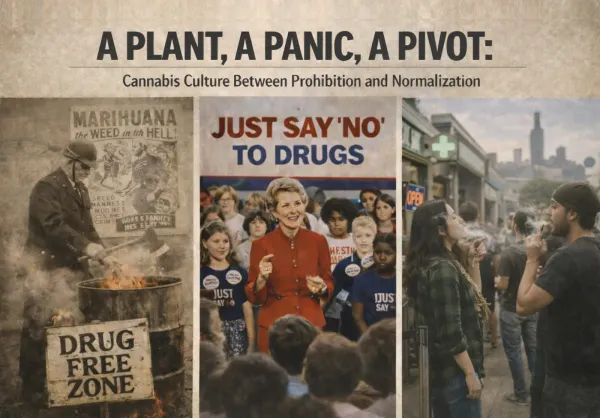
This gap has historical roots. Cannabis prohibition in the twentieth century was not driven solely by concerns about public health. It was entangled with racialized narratives, political incentives, and law enforcement priorities that framed the plant as a social threat rather than a subject for neutral scientific inquiry. Entire communities were criminalized while research pathways were effectively closed. Even today, regulatory barriers make large-scale clinical studies difficult to conduct.
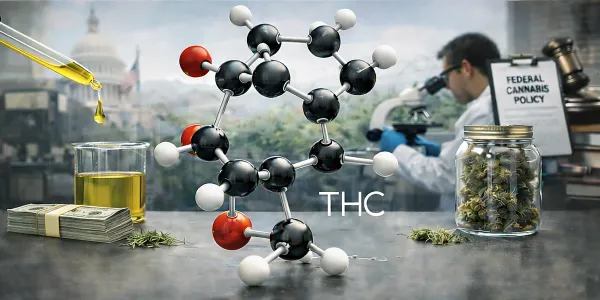
As legalization expands, the legacy of that approach persists. We have markets without measurement, products without standardized definitions, and policy debates that often rely more on anecdotes than evidence.
Building a credible research foundation requires coordination across stakeholders that do not traditionally collaborate. Government agencies must establish clear frameworks and provide funding. Scientists need access to diverse product samples and real-world usage data. Industry participants — who possess enormous operational knowledge — must be able to contribute information without fear of regulatory retaliation or competitive disadvantage. Public health experts need longitudinal data to assess both benefits and risks.
None of these groups can solve the problem alone.
Industry already holds vast datasets: cultivation techniques, potency levels, consumer preferences, adverse events, therapeutic outcomes, supply chain performance, and more. Much of this information sits in proprietary silos, underutilized because there is no neutral mechanism for aggregation and analysis. Meanwhile, academic researchers often struggle to obtain representative samples or funding streams sufficient to produce robust studies.
A middle ground would allow responsible data sharing under strict safeguards — protecting privacy, intellectual property, and public safety while enabling evidence-based policy development.
Consumer education suffers from similar fragmentation. In many jurisdictions, what is labeled “education” is effectively brand marketing presented in a regulatory wrapper. Companies sponsor informational materials that highlight their own products, while independent scientific communication struggles to compete for attention. The result is confusion rather than clarity.
This is particularly problematic given the complexity of the endocannabinoid system — a biological network that interacts with mood, pain perception, appetite, sleep, and immune function. For some individuals, cannabis offers significant therapeutic benefits. For others, it can exacerbate anxiety, cognitive impairment, or dependency. Dosage, delivery method, individual physiology, and context all matter enormously.
Reducing this complexity to slogans or product claims does consumers a disservice.
Today’s consumers, equipped with AI-driven information tools, expect nuanced guidance. They want to understand not only how a product might affect them but also how it is produced, tested, transported, and regulated. Professionals across adjacent industries — law, accounting, finance, healthcare, agriculture — similarly require standardized knowledge frameworks to operate responsibly in the sector. Outside of a few specialized firms, this expertise remains thinly distributed.
States have begun to address workforce education through programs such as Responsible Vendor Training, which provides baseline instruction for retail employees and other frontline workers. These efforts are valuable but limited in scope. They focus on compliance and safety rather than deeper understanding of the plant, its pharmacology, or its economic ecosystem.
What is missing is a layered educational architecture: foundational public health information, professional certification pathways, interdisciplinary research initiatives, and transparent communication channels connecting all of these elements.
Agriculture and medicine, in particular, must be linked more intentionally. Cannabis is both a crop and a pharmacologically active substance. Decisions made at the cultivation stage — genetics, soil conditions, pest management, harvesting techniques — directly influence chemical composition and, ultimately, human outcomes. Yet agricultural science and clinical research often operate in parallel rather than in partnership.
A comprehensive framework would treat the plant’s journey from seed to consumer as a single continuum rather than a series of disconnected steps.
Such an approach would benefit regulators as well. Evidence-based standards could replace reactive rulemaking, reducing uncertainty for businesses while improving safety for consumers. Clear definitions of potency, impairment, labeling, and dosage would enable more consistent enforcement across jurisdictions.
None of this will eliminate disagreement. Cannabis will likely remain controversial, as alcohol and pharmaceuticals are. But controversy grounded in data is fundamentally different from controversy driven by speculation.
The stakes extend beyond cannabis itself. The ability to integrate scientific research, industry expertise, and public policy around a complex product category is a test of institutional competence. Success could provide a template for addressing other emerging technologies and substances.
States, despite their limitations, have demonstrated that innovation can occur outside federal leadership. By experimenting with regulatory models and training programs, they have begun to assemble the components of a functional system. The next step is connecting those components into something coherent.
Ultimately, education is not about persuading consumers to use cannabis or to avoid it. It is about enabling informed decisions — by individuals, businesses, and governments alike. That requires credible information, consistent standards, and a willingness to acknowledge both benefits and risks without exaggeration.
In other words, it requires a middle ground.
Until such a foundation exists, the cannabis industry will continue to operate in a paradox: a multibillion-dollar market built on incomplete knowledge. Bridging that gap is less glamorous than launching new products or debating policy headlines, but it is essential if the plant is to move from contested substance to responsibly managed part of modern society.