Is Cannabis the New White Claw, or Something Bigger?

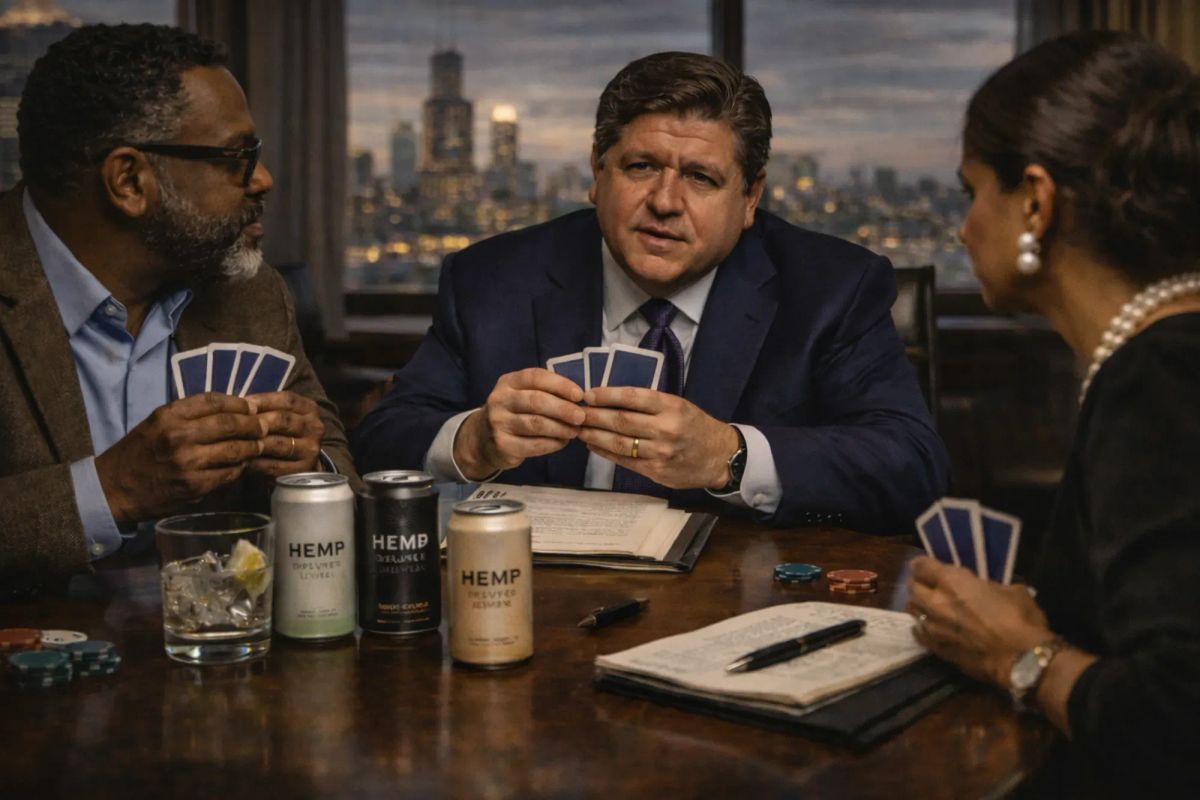
For a while, Illinois cannabis had the clean moral architecture of a campaign promise.
When J.B. Pritzker ran for governor, legalization was not just a growth story or a cultural wink. It was framed as repair. Expungement. Social equity. A chance, however imperfect, to address the damage done by the war on drugs, especially in Black communities that had absorbed the punishment while others absorbed the profits. Cannabis was a winning social issue. It was also a state-building issue. Illinois was not merely legalizing a plant. It was trying to create a market, a workforce, and a new civic language around both.
That was the opening chapter.
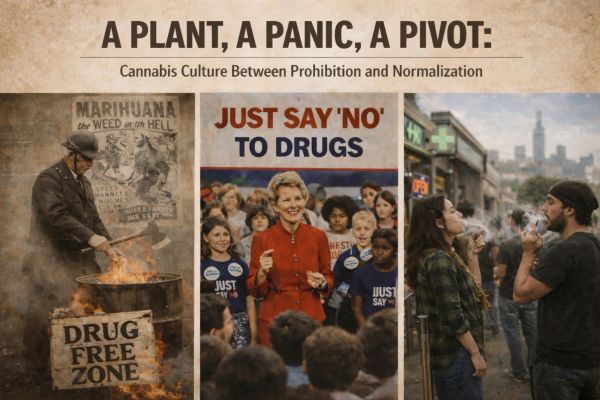
The current chapter is messier, more Midwestern, more commercially revealing, and probably more consequential. Because cannabis in 2026 is no longer mainly about whether the plant should be legal. That argument, for the most part, has already been decided by consumers, culture, and common sense. The real fight now is over who gets to define the category as it moves from regulated exception to normalized habit.
That is where the White Claw analogy comes in.
Not because cannabis is literally hard seltzer with THC. Not because every future consumer wants a canned buzz. And not because licensed marijuana operators are suddenly irrelevant. Flower, gummies, vapes, medical products, cultivation, research, and dispensary retail remain foundational to the industry. But intoxicating hemp beverages have done something politically and culturally important: they have made cannabis legible to people who do not want to walk into a dispensary, decode strain names, or feel like they are entering a parallel economy just to unwind after work.
That is a category shift.
And category shifts tend to rearrange power.
Illinois licensed operators spent years building businesses inside a tightly regulated framework. They endured the legal uncertainty, the capital intensity, the security requirements, the municipal headaches, the compliance burdens, and the endless public scrutiny that come with standing up a new industry under state supervision. They hired lawyers, marketers, operators, accountants, construction teams, retail staff, logistics professionals, and senior leadership. They built real businesses in real buildings under real rules. The implied deal was straightforward: if you take the risk and follow the rules, you get a meaningful say in the future.
Then hemp beverages arrived with a different proposition.
Meet consumers where they already are. Sell in liquor stores, music venues, bodegas, and mainstream retail. Use drinking culture to lower the social barrier to entry. Reframe cannabis not as something hidden behind a counter and a security check, but as a consumer product category with broader reach and fewer rituals. In that world, cannabis starts to look less like an exception and more like a shelf-space war.
No wonder everyone is suddenly talking past one another.
Traditional media likes to score this as licensed marijuana versus hemp beverages, compliant operators versus opportunists, regulators versus entrepreneurs. That’s tidy. Reality is not tidy. The truth is that all these groups are looking at the same blurry horizon and seeing different futures. Some see normalization. Some see unfair competition. Some see a loophole. Some see overdue innovation. Some see a public health risk. Some see a tax-revenue engine. Some see the latest version of a classic American story, where the market moves faster than the rules and culture moves faster than both.
J.B. Pritzker remains one of the central characters in that story.
He deserves real credit for making cannabis reform durable in Illinois. The expungements mattered. The social-equity framing mattered. So did the administration’s decision to support the Cannabis Research Institute with state dollars. That was a meaningful signal that Illinois wanted something more than tax revenue and ribbon-cuttings. It wanted research, legitimacy, and a long-term knowledge base. Whether the institute has been empowered enough, constrained too much, or bureaucratically softened by politics is part of the debate now. But Illinois, to its credit, tried to do more than launch a market. It tried to build an ecosystem.
Still, that ecosystem is now straining under its own contradictions.
Licensed operators want recognition for the risks they took and the framework they helped stand up. Hemp beverage entrepreneurs argue, not without reason, that they are expanding the consumer base and helping cannabis enter everyday commercial life. Flower and gummies producers, including those selling products that do not even get users high, are staring at federal and state uncertainty that can feel existential. Everyone talks about responsibility. Everyone talks about self-regulation. Everyone talks about access. The devil, as always, lives in the details, especially when the details involve distribution.
And distribution may be the whole story.
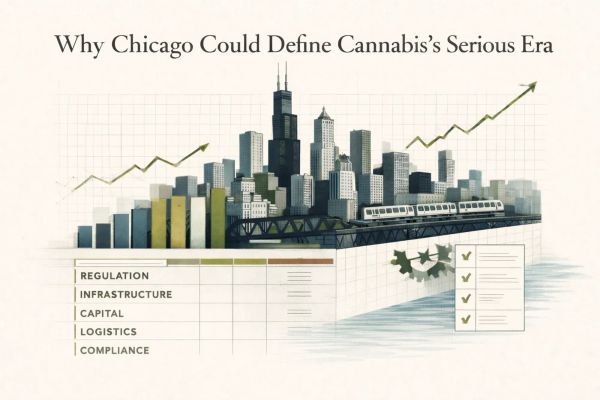
Chicago understands this better than most. It is not merely a city of consumption. It is a city of application. It takes categories and routes them through branding, logistics, finance, law, hospitality, media, and policy. That is why Chicago has a real chance to become a cannabis applications town even if it never becomes the ideal place to grow at scale. It is also why intoxicating hemp beverages matter so much here. They are not just a novelty product. They are a test of whether cannabis can move into ordinary consumer life without losing the thread of accountability and coherence altogether.
Mayor Brandon Johnson should be paying more attention.
Cannabis aligns with too many of Chicago’s economic and political interests to remain a side issue. This is not some niche category anymore. Tens of thousands of professionals across Illinois work in and around cannabis. Not just people in dispensaries or cultivation sites, but finance leaders, brand builders, supply-chain experts, attorneys, compliance professionals, event producers, researchers, construction firms, consultants, accountants, and operators. This is a workforce. This is a tax base. This is an urban economic cluster. Yet city permitting remains cumbersome, development strategy feels fragmented, and Chicago still seems unsure whether it wants to lead the category, merely host it, or cautiously tolerate it.
The Midwest, meanwhile, is not waiting for Illinois to sort out its identity.
Michigan has become both a price laboratory and a cautionary tale. Missouri shows how a red state can apply libertarian instincts to access and retail. Minnesota has given hemp beverages meaningful cultural runway. Kentucky’s hemp farmers are watching Washington and wondering what, exactly, they should be planting for 2027. Ohio is learning from the first generation of legal states while trying not to repeat every mistake. Across the region, operators, investors, service providers, and lawmakers are building in real time while federal rescheduling, farm bill revisions, and patchwork enforcement threaten to upend assumptions overnight.
Which brings us back to the central question.
Is cannabis the new White Claw?
Not exactly.
But it may be the first moment when cannabis, in one of its most commercially potent forms, begins behaving like a mainstream consumer category rather than a culturally isolated one. That matters. Because once a category becomes mainstream in form, the people who control shelf space, distribution, regulation, and narrative often gain more power than the people who first built the market.
That is why the conversation has to get better, and fast.
As one loyal Grown In participant put it, cannabis leaders are seeking unity across the hemp and marijuana divide. That is not just good rhetoric. It is a market necessity. The old binary is no longer useful enough. The region needs a more mature conversation, one that includes licensed flower operators, intoxicating beverage brands, CBD businesses, researchers, policy thinkers, municipal officials, lawyers, accountants, construction firms, security professionals, and the many service providers who have invested in real cannabis-specific expertise.
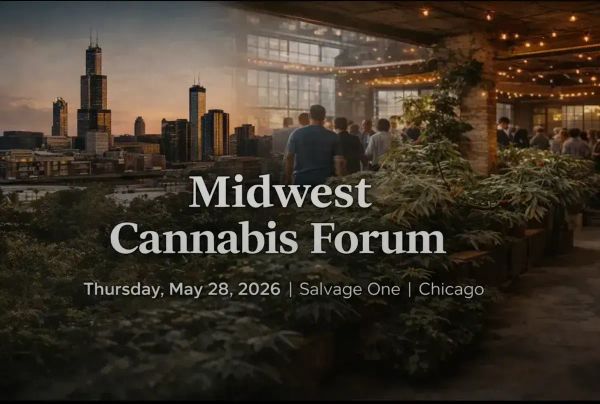
That is the purpose of the Midwest Cannabis Forum on May 28 at Salvage One in Chicago.
This is not designed as another echo chamber or another self-congratulatory industry gathering. It is meant to be a room where the people building this market can hash things out before someone else writes the next chapter for them. We need practitioners from across state lines. We need licensed marijuana leaders and intoxicating hemp beverage operators. We need lawmakers who are willing to hear where the market is actually heading. We need service providers who understand the cost of getting regulation wrong. Most of all, we need candor before policy calcifies and the category gets defined without the benefit of the people doing the work.
Illinois helped launch one of the country’s most closely watched cannabis experiments.
Now the question is whether it can lead the next chapter too.
Because cannabis is no longer asking for permission to exist. It is asking who gets to define what normal looks like.
That is a harder question. It is also a more important one.