Chicago grew the conversation. The Midwest can shape what comes next.
Grown In returns to explore how cannabis, hemp, beverage, research, and policy are reshaping the industry — and why Chicago is well positioned to help lead the next phase.

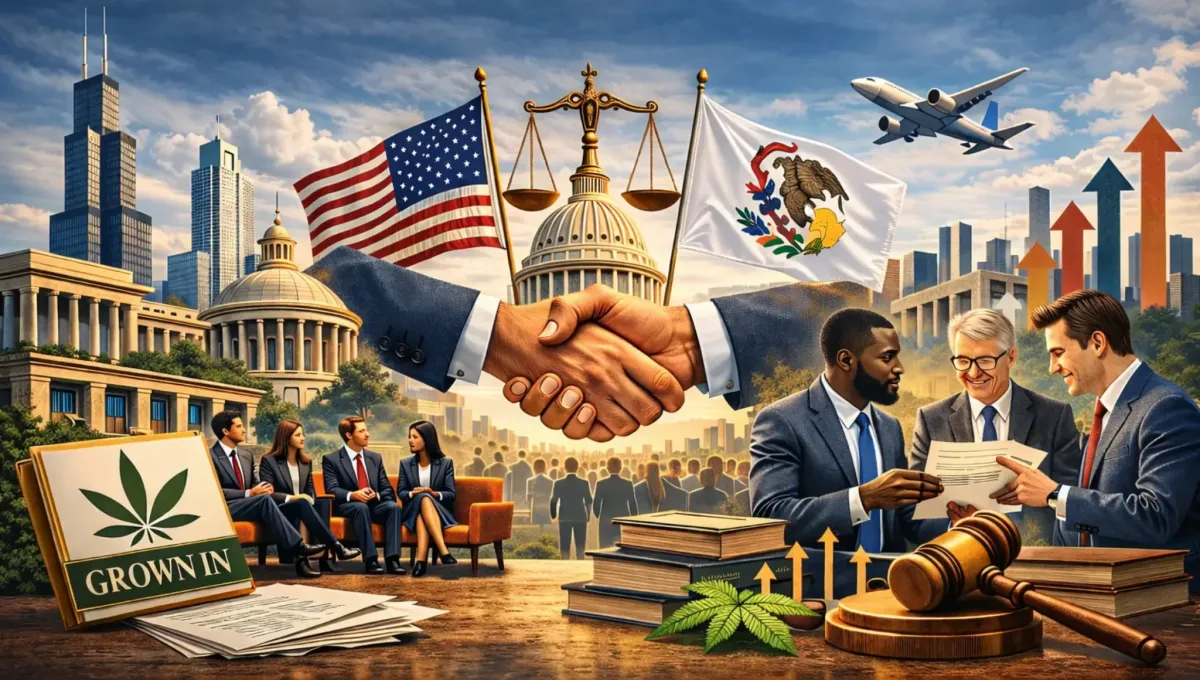
From the day Governor J.B. Pritzker and the Illinois legislature approved the formation of a regulated cannabis, Grown In documented the rise of legal cannabis in Illinois and the Midwest — not as a spectator sport, but as a civic, economic, and scientific experiment unfolding in real time.
Along the way, we convened entrepreneurs, regulators, researchers, investors, and community leaders at institutions such as 1871, Discovery Partners Institute, World Business Chicago, and others across the region. We built business-to-business marketplaces, professional development programs, and public conversations designed to help a complicated new industry stand on solid ground.
We also did investigative reporting — including hard questions around Illinois’ Social Equity program, where the promise of generational wealth for communities disproportionately harmed by the War on Drugs often collided with the realities of capital markets, licensing structures, and administrative complexity. At times, the only way to understand what was happening was to file FOIA requests and follow the facts wherever they led.
During my recent “sensimilla sabbatical,” I shifted much of my civic work into adjacent frontier domains — artificial intelligence, quantum technology, and the broader infrastructure of emerging industries. That experience reinforced something important:
Cannabis is not an isolated sector. It sits at the intersection of science, commerce, public policy, healthcare, agriculture, finance, and culture.
A Market That Has Matured — and Fragmented
Today, the landscape looks very different from the early days of legalization.
State-licensed operators continue to consolidate and professionalize, even as many struggle under federal tax policy (including Section 280E) and capital constraints. Several Chicago-founded multi-state operators remain major national players, with a few — notably Green Thumb Industries — demonstrating sustained profitability.
At the same time, a parallel intoxicating hemp market has emerged through federal loopholes in the 2018 Farm Bill, particularly in beverages and consumer packaged goods. Products once confined to dispensaries now appear in mainstream venues, including major sports arenas.
When Congress revisits the Farm Bill, expected before November 2026, most observers anticipate some form of regulatory reset — possibly including a “beverage exception” that recognizes the growing overlap between cannabis, alcohol, and wellness markets.
Meanwhile:
- Banks and institutional investors remain cautious
- Federal rescheduling remains uncertain
- Research funding is still limited
- Public understanding of risks and benefits is uneven
- Global markets continue to develop independently
In short, the industry has moved from startup chaos to regulatory complexity.
The Need for a Middle Ground
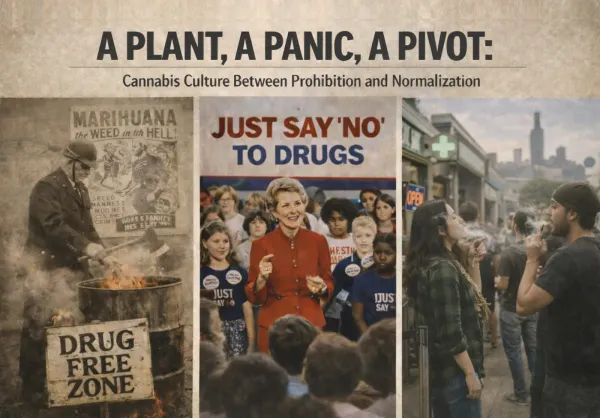
Cannabis policy debates often swing between extremes — prohibition and hype, moral panic and unchecked commercialization.
But in practice, most stakeholders occupy a pragmatic middle:
- Scientists seeking credible research pathways
- Businesses trying to operate compliantly
- Communities balancing economic opportunity with public health
- Regulators navigating incomplete information
- Consumers looking for safe, predictable products
There is also growing tension between different segments of the plant economy:
- Licensed state operators
- Intoxicating hemp producers
- Beverage companies entering the space
- Pharmaceutical and research institutions
- Legacy and equity entrepreneurs
- International players
Ultimately, these constituencies are dealing with variations of the same molecule — but within very different legal and economic frameworks.
Research, Policy, and the Public Good
One encouraging development has been the emergence of state-supported research efforts, including the Cannabis Research Institute backed by the University of Illinois System. These initiatives are rare, valuable, and often constrained by federal law and funding realities — yet they represent an essential bridge between science and commerce.
More rigorous study is urgently needed. Cannabis has demonstrable medical benefits for many people, but it also carries health and social risks that deserve honest evaluation. Evidence-based policy requires data, not slogans.
Chicago and the Midwest Advantage
The Midwest occupies a unique position in the national landscape:
- Strong regulatory institutions
- Deep agricultural expertise
- Major transportation and logistics infrastructure
- World-class research universities
- A culture of pragmatic problem-solving
- Global business connections
Chicago, in particular, has repeatedly served as a testing ground for complex industries — from commodities trading to healthcare systems to advanced manufacturing.
The region also has deep international ties, including with Canada, which remains a significant financial and operational hub for the cannabis sector.
Why Grown In Is Returning Now
Grown In returns as a platform for sober analysis, strategic convening, and practical collaboration across cannabis, hemp, beverage, research, regulation, and commerce.
Our goal is not to amplify hype or take ideological positions. It is to create space for informed dialogue among people who are actually building, regulating, studying, and financing this industry.
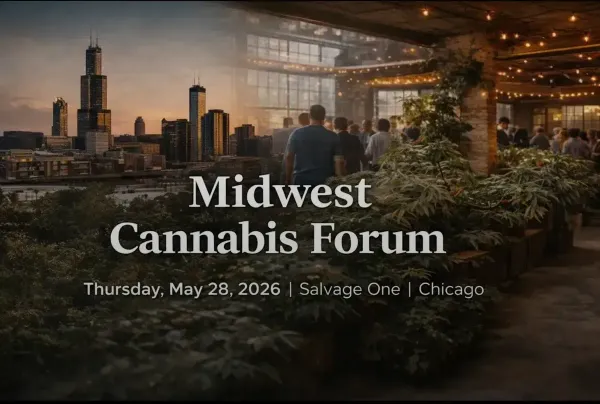
On May 28, 2026, we will convene leaders from across these domains at the Midwest Cannabis Forum in Chicago — a focused gathering designed to surface insights, identify common ground, and explore what responsible growth could look like in the years ahead.
Looking Forward
Cannabis regulation in the United States took decades to evolve after alcohol prohibition ended, and the process remains imperfect even today. There are no easy fixes — only gradual improvements driven by evidence, dialogue, and institutional learning.
The next phase will likely involve:
- Clearer federal frameworks
- Integration with mainstream consumer industries
- Expanded medical research
- Professionalization of operations
- International coordination
- Greater public transparency
Chicago and the Midwest have the capacity to help shape that future — if stakeholders are willing to engage thoughtfully across traditional boundaries.
Join the Conversation
Grown In will continue to provide insights on the Chicago, Illinois, and Midwest markets while examining national and global developments that affect the region.
Progress in complex industries rarely comes from a single breakthrough. It comes from sustained engagement among people with different incentives, expertise, and perspectives.
We invite you to be part of that process.
— Brad Spirrison Founder, Grown In Chicago