Chicago as Application City: Cannabis, Capital, and the Search for a Middle Ground

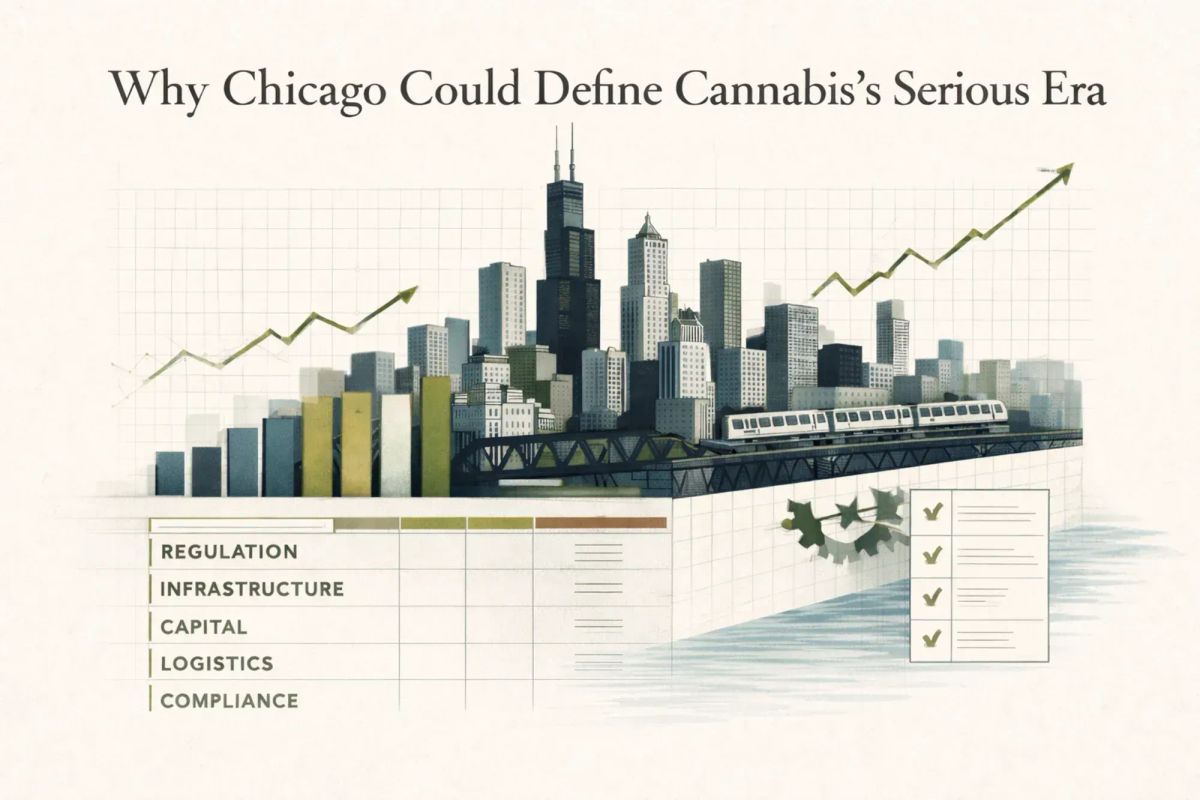
Chicago has rarely been the place where a new industry is invented. It is, however, where industries grow up.
Grain trading matured here. Railroads converged here. Futures markets professionalized here. Consumer packaged goods scaled here. The city’s core competency is application — taking something messy, regional, or experimental and building the systems that make it durable, bankable, and boring in the best possible way.
Cannabis is no exception.
While the plant economy has deeper cultural roots in California, Colorado, and legacy markets across the country, Illinois — and Chicago in particular — has become a proving ground for what a fully regulated, institutionally integrated cannabis market looks like. This is not accidental. It reflects the city’s long-standing strengths across financial services, life sciences, food and beverage, logistics, advanced manufacturing, and marketing. Chicago knows how to build industries that operate at scale under scrutiny.
There are now thousands of professionals in the region who have spent a decade or more navigating cannabis from inside traditional corporate disciplines: supply chain managers, compliance officers, tax specialists, brand strategists, distribution experts, pharmaceutical researchers, real estate developers, and regulators. Many came from established sectors — alcohol, consumer goods, healthcare, agriculture — bringing with them both operational rigor and a tolerance for regulation. Some have literally helped draft the rules they now follow.
That accumulated expertise is a quiet competitive advantage.
Illinois legalization itself was framed as a landmark attempt to correct historical injustices stemming from the War on Drugs. The Pritzker administration’s social equity provisions sought to create pathways into ownership for communities disproportionately harmed by prohibition. The ambition was admirable. The execution, as even sympathetic observers acknowledge, was uneven. Licensing delays, capital constraints, litigation, and administrative complexity created what could politely be described as a turbulent adolescence.
External pressures compounded the challenge. Michigan’s low prices siphoned consumers across state lines. Local governments struggled to balance tax revenue with community concerns. Investors grew cautious as federal illegality continued to distort the economics of the industry. Meanwhile, internal divisions — between corporate operators, social equity entrepreneurs, legacy participants, and ancillary businesses — made it difficult to present a unified set of priorities to policymakers.
In Chicago, there is also a cultural tendency toward maximalism: a belief that if something is worth doing, it must be done better than anywhere else. That drive has built great institutions, but it can also produce impatience with incremental progress. Cannabis policy, like alcohol policy before it, evolves slowly. Markets mature unevenly. There are few clean wins.
In 2023, a cross-section of stakeholders attempted to take stock through what became known as the Burn ’Em Plan — an effort to identify structural obstacles and propose practical reforms. The conclusions were sobering rather than sensational. Capital scarcity, driven largely by federal prohibition and tax policy, remained the dominant constraint. Fragmentation within the industry diluted political leverage. Public understanding lagged behind commercial activity. Education efforts were often either advocacy-driven or purely technical, leaving a gap for neutral, credible frameworks that could guide best practices.
Two years later, those underlying conditions have not changed dramatically.
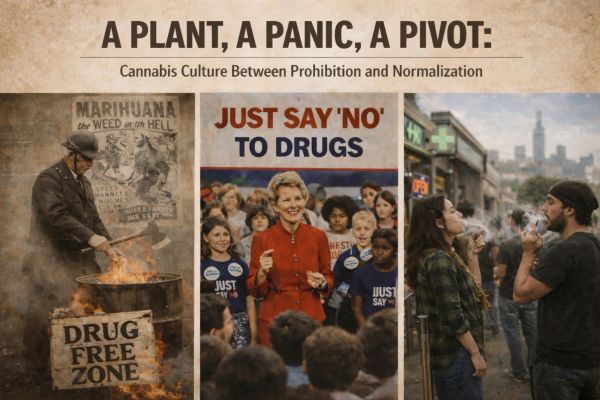
What has changed is the cultural conversation. Cannabis is no longer primarily debated as a moral question — good or bad, liberating or dangerous. Instead, it is increasingly viewed as a regulatory puzzle: How should it be taxed? Who should be allowed to participate? What standards ensure safety without strangling innovation? How do states reconcile competing federal signals? How should research be conducted and funded? What lessons can be drawn from alcohol, tobacco, pharmaceuticals, and other controlled markets?
These are governance questions, not culture-war questions.
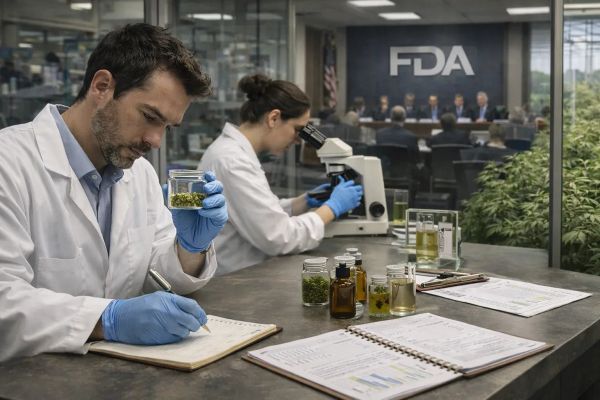
Chicago is well positioned to help answer them precisely because it sits at the intersection of so many regulated industries. The city’s professional class is accustomed to operating within complex compliance regimes while still pursuing growth. It understands risk management, institutional trust, and the long arc of policy evolution. It also has universities, national laboratories, trade associations, and civic organizations capable of convening diverse perspectives — if the incentives align.
And incentives remain the crux of the problem.
Corporate operators prioritize stability and capital access. Social equity entrepreneurs seek fair opportunity and relief from structural disadvantages. Regulators balance public safety with economic development. Researchers want funding and legal clarity. Local communities care about jobs, taxes, and neighborhood impact. Consumers want safe products at reasonable prices. Each constituency is rational within its own framework, but those frameworks do not always reinforce one another.
Without deliberate convening, the system defaults to gridlock.
Cannabis, despite its long history of cultural symbolism, is ultimately just another agricultural commodity with psychoactive properties — a plant that humans have cultivated, celebrated, restricted, and misused for thousands of years. It is neither a miracle cure nor a societal scourge. It is a complicated product requiring thoughtful rules, responsible businesses, informed consumers, and honest research.
That suggests the need for a middle ground — not as a rhetorical flourish, but as an operational principle. A space where stakeholders can compare incentives, surface tradeoffs, and pursue workable compromises without pretending that everyone will get everything they want.
Chicago has built entire industries by doing exactly that.
The question now is whether the city will apply those same pragmatic instincts to cannabis — moving beyond adolescence toward a mature market that acknowledges past harms, recognizes present realities, and plans for a future in which the plant economy is integrated, regulated, and understood rather than feared or romanticized.
If history is any guide, Chicago will not invent the next phase of cannabis. It will systematize it.
And in doing so, it may once again demonstrate that the city’s greatest export is not a product, but a way of organizing complexity into something that works.